My first real job in high school was at a grocery store. I bagged groceries, stocked shelves, and made my way to the meat department as the cleanup boy. Not long in, I began to learn how to grind meat, use the tenderizer, and distinguish between cuts.
After a year or so working part time, I was hired full time and became more and more skilled. I began butchering deer with a friend at night, worked at a local slaughter house on my day off, and my friend, Steve and I began buying a few pieces of equipment to process at home.
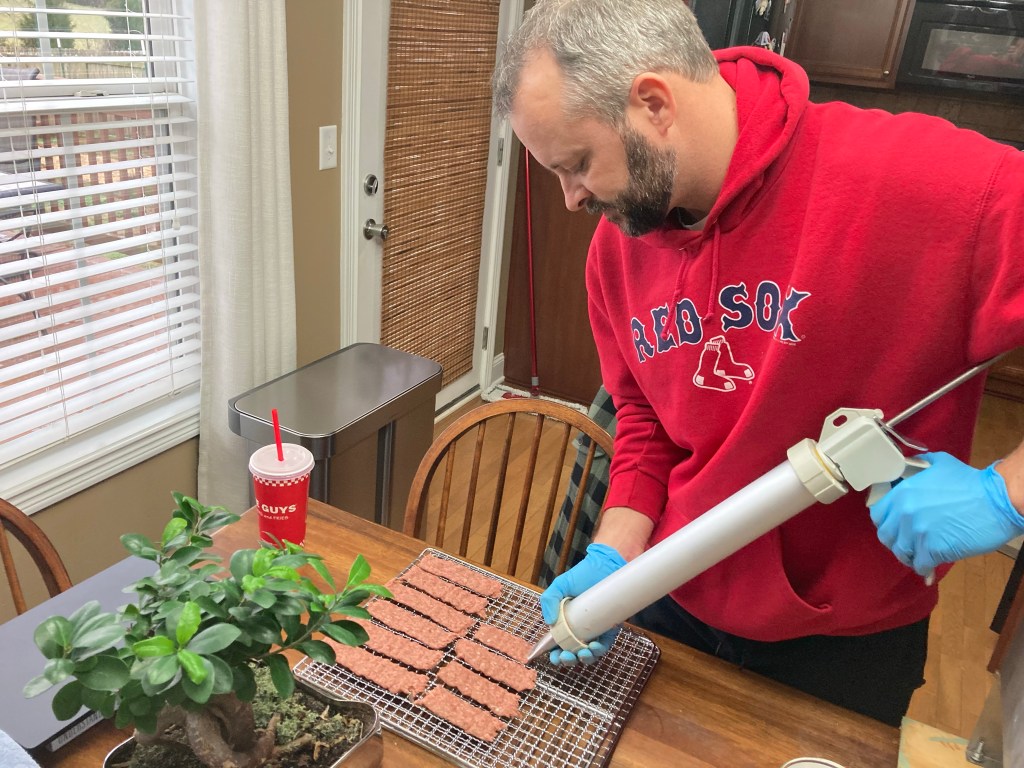
Fast forward to today. I have two meat grinders (a .5hp Cabelas with a #8 head and a 1.5hp MEAT #32 head grinder). One 50lb tilt mixer that attaches to the 1.5hp MEAT grinder. Cabelas manual tenderizer. A MEAT jerky gun. A Hakka vertical 15lb sausage stuffer. For my birthday this year I bought a tri-hone knife sharpener that no normal man should own. It’s a commercial grade one that professional meat shops use. My wife teases me unmercifully about these items and the totes of accessories. I think I’m about one very large donor away from opening “Simply Sausage OKC.” A VERY large one.
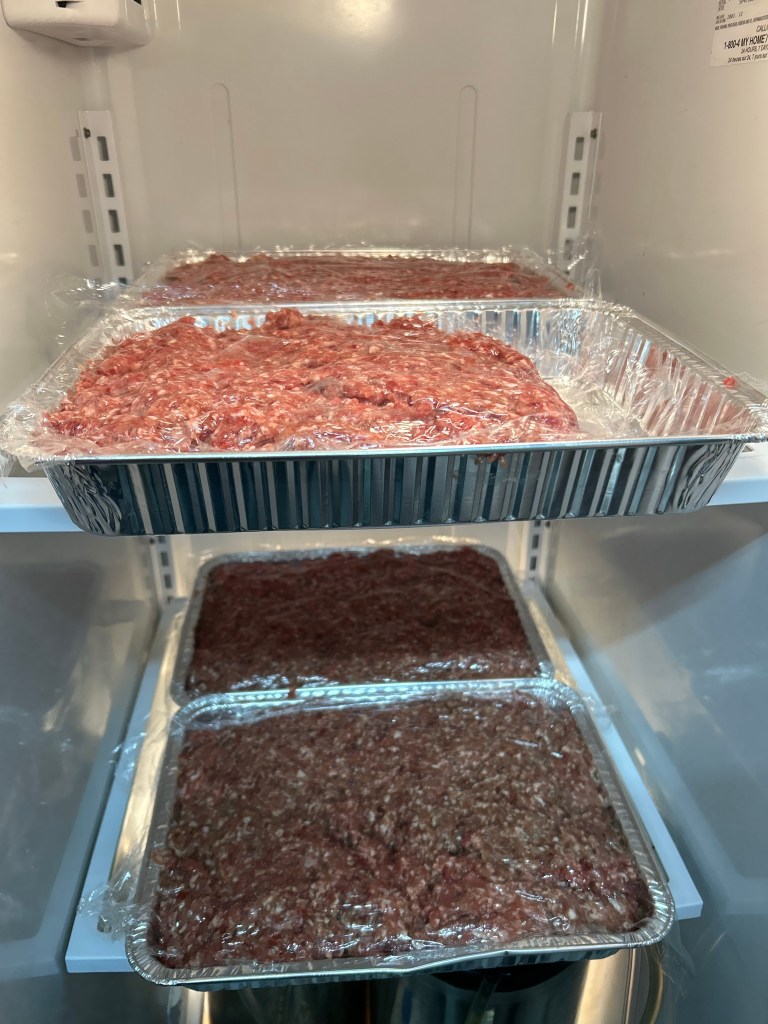
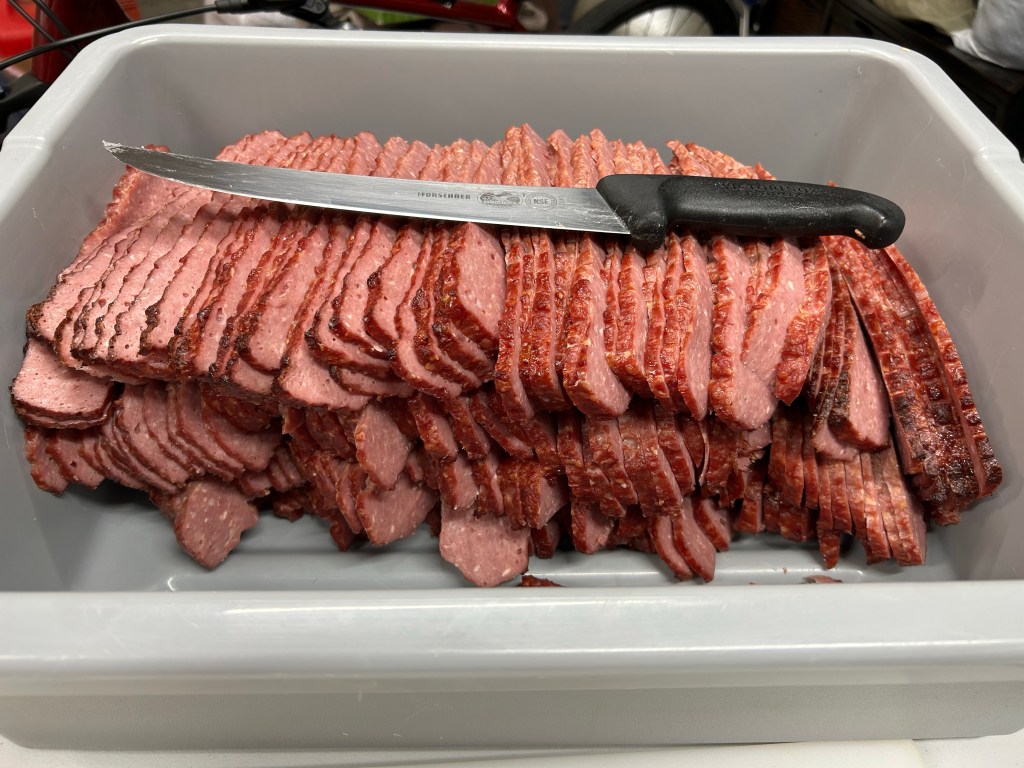
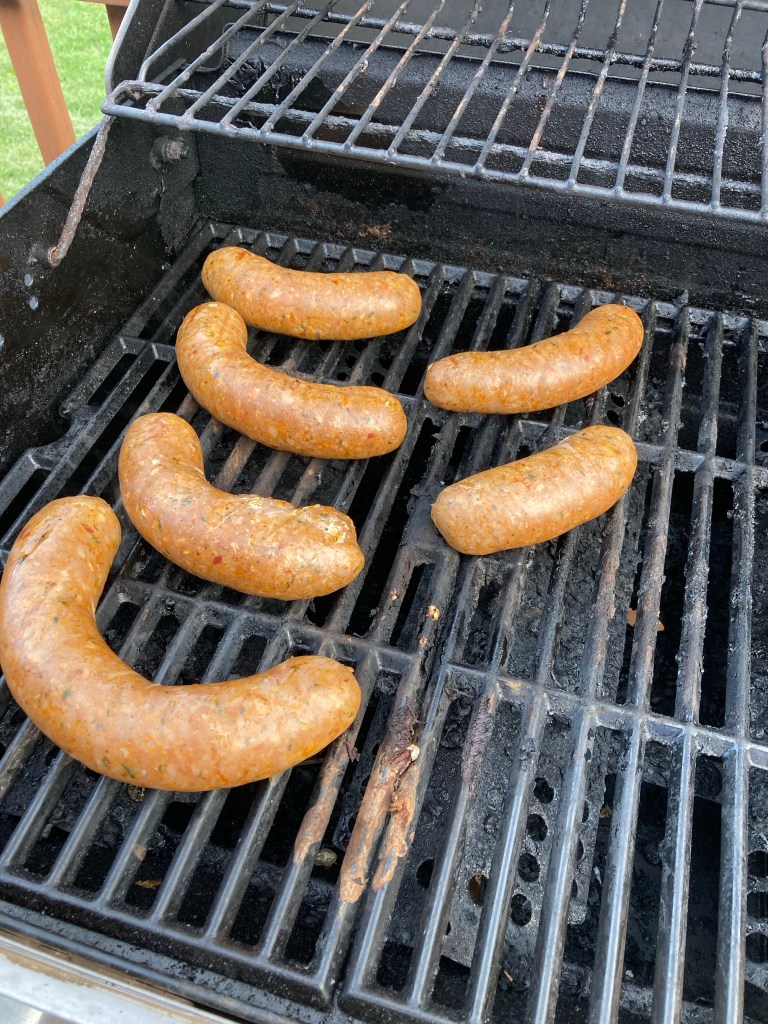
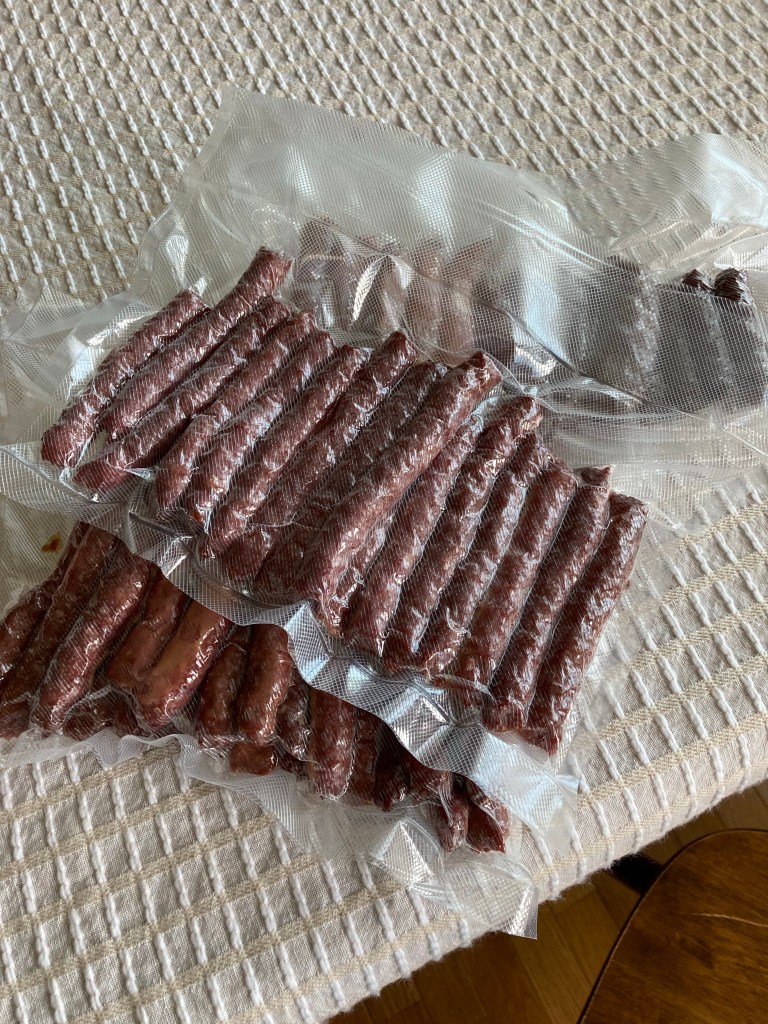
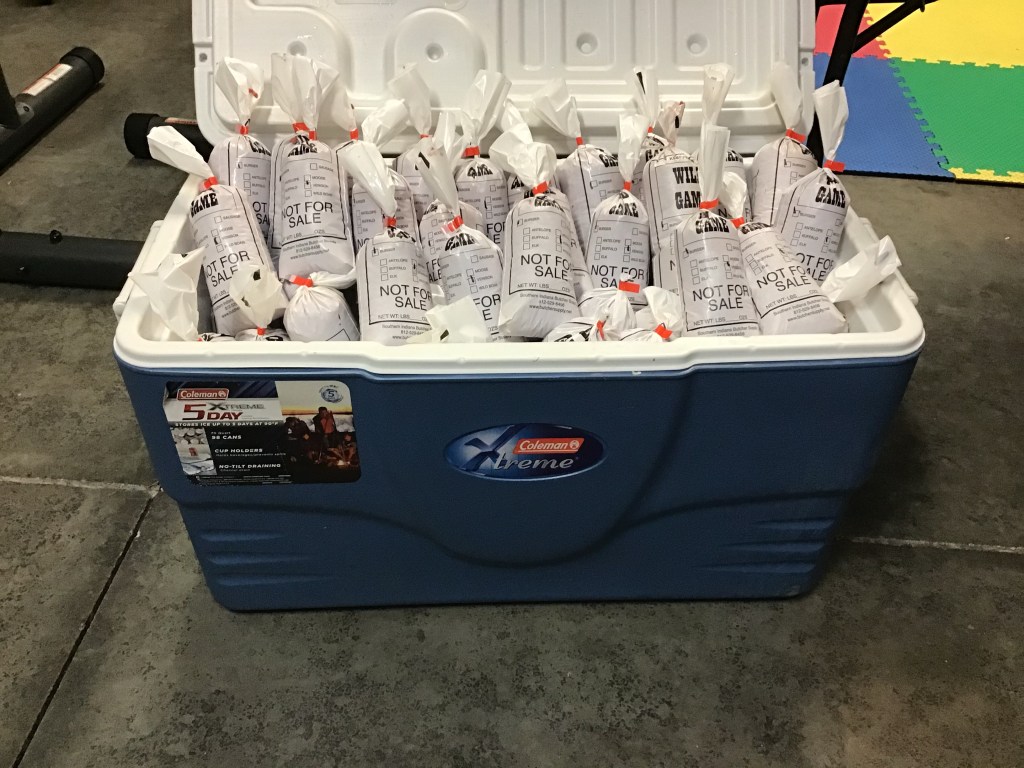
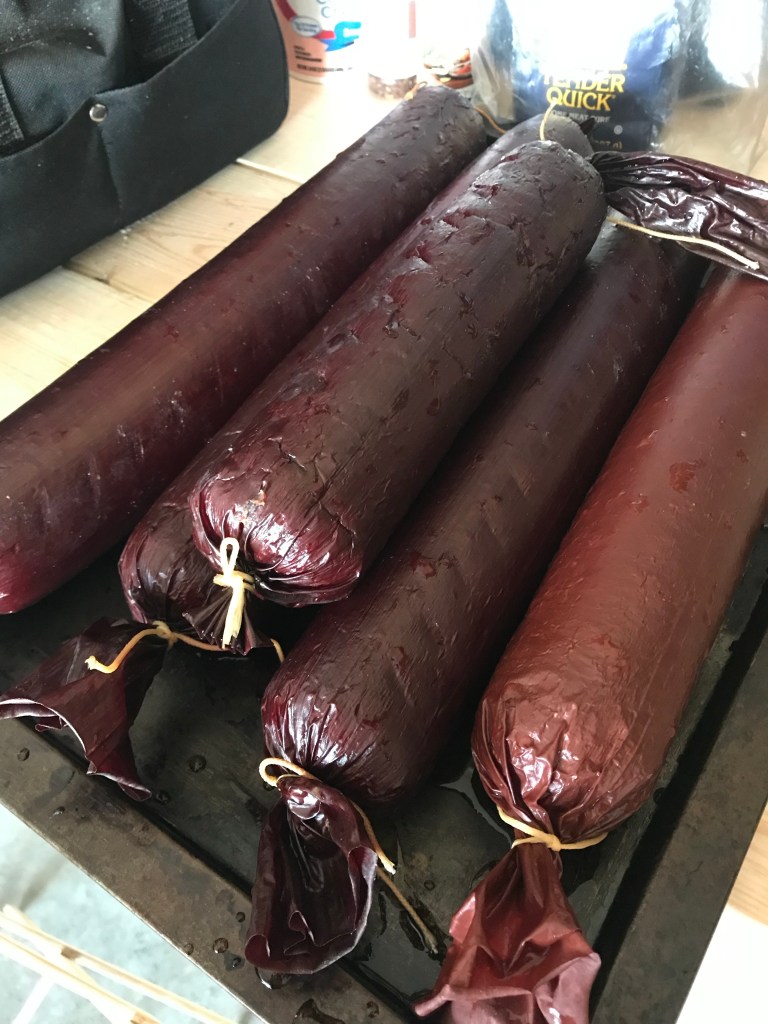
Below are a few examples of this hobby. Deer bacon, brats pre-linked, breakfast sausage links, deer snack sticks, 1lb packages of ground deer/beef, summer sausage tubes, and flat deer jerky.
Several years ago, I was visiting my friend in his office and noticed the same Bible had been on an end table in his sitting area. I asked about it, and he said, “I keep that there to remind me some disciples simply don’t make it.” My friend had been meeting with another believer and encouraging him to grow in Christ. One evening, the new believer left without his Bible. Calls and texts went unanswered, and the Bible has become a Bethel of sorts: “Remember this day the disciple that wanted no more discipling and ponder on the lessons you have learned from wayward disciples!” (1 Hesitations 31:13)
While you might not have an ownerless Bible on your end table, you may be left alone at the coffee shop after you’ve blocked off time to meet with this disciple. Honestly, this doesn’t bother me like it did 5 or 10 years ago. I’ve been left hanging enough that I usually bring some extra work or a book. I’ve also learned to create boundaries with this type of disciple. (More on this below.)
So, now what? Do I leave the Bible on the end table and get bitter over the guy who didn’t want to meet with me or learn what I can and keep going? How can I continue to love the “end table guy?”
Continue to Pray for HimEph 6:18 We are to pray for all the saints. This prayer includes the believer who left his Bible on your table the last time you saw him and won’t return your texts. Make a repeating calendar reminder a few times a month, or place it within your prayer journal or app. Keep praying for him to get hungry for the Lord.
Periodically Connect With Him1 Tim 1:1-2 Paul instructed and encouraged his disciples. We might not write a doctrine-filled letter/email/text to our uninterested friends. Still, we can occasionally call/text/DM them to let them know we love them. Skip the stereotypical, “I’ve missed our time together” or “I miss seeing you at church/group,” but let them know you pray for them occasionally. Ask how they are doing, and see if you can learn about their family, work, or hobby. Let them know you love them.
Recognize it’s NormalMark 4:3-9 In Mark 4, Jesus describes four different soil types. The “end table guy” may fall into one of these categories. He may not. It may be that he has overcommitted his life and hasn’t learned how to use boundaries properly. He may have a hectic season at work, the kiddos are having a hard time at school, and his wife has been sick, so he needs to spend more time at home. Grace and understanding are necessary for discipleship. (But it’s also normal when people leave their Bible on the end table, never to be seen again.)
Leave the Door Open2 Tim 2:2 As disciplemakers, we seek faithful believers who will teach others. These believers are FATR-Faithful, Available, Teachable, and Reproducible. Some people are not, but keep the door open! The Spirit might convict, empower, enable, persuade, or provide some relief at home/work for them to join you again. When I started discipling other men, a mentor told me, “Make sure you have healthy boundaries. Some people will promise to meet with you repeatedly but won’t. After about three consecutive missed meetings, tell them you recognize they are busy right now and ask them to reach out to you when things calm down.” You are protecting your time AND leaving the door open for a possible discipleship relationship sometime in the future.
Keep Sowing/DisciplingActs 13:13-14 Paul and Barnabas kept going after John Mark left them and returned to Jerusalem. After John Mark left, Paul continued to preach in the synagogue (14-43), preached again the next Sabbath (44), and made more disciples for the Lord (52). They kept going! My friend Charles always said, “What you are looking for are hungry fish! Find out where the fish are hungry and feed them!” How do you know where the hungry fish are? Fish everywhere, and you’ll learn. Spending quality time intentionally sharing and pouring into a few hungry believers is life-changing! Being intentional in my prayer to the Lord is vital. Not only does He listen, but He answers!
Surround Yourself with Strong Believers Who Will Encourage You. 2 Tim 4:9-11 If you are like me, you may get discouraged in the faith when you are not walking closely with several other believers. Whether I’m actively discipling others or the Lord has given me some time of respite, I desperately need to be around other believers who know me, love me, challenge me, and encourage me to both operate within my gifts and seek the Lord to desire those I don’t have but want genuinely.
We arrived in OKC in early July and jumped right into community at our new church. We found a community group, starting attending a prayer meeting on Wednesdays at noon, outreach a few Saturdays, a training here and there, and some other advertised events. Almost every time we meet someone new at church and we tell them we just moved here, they ask, “So why did you move here? A job? Family? School?”
When we say, “We moved here to attend Bridgeway,” the response from our new family has been overwhelming. We’ve had people invite us into their homes, take us to dinner, show us around town, and encourage us to use our gifts and grow alongside them. One family recognized there were others just like us and organized a get together so we could all connect!
Prior to moving here, we had been praying and listening to the Lord about what He had in store for us next. We knew we would be in a stage of learning, and wanted to be at place where both the Word and the Spirit was valued, taught, and practiced. Over a period of about a year, we watched as the Lord miraculously put each step in front of us without allowing us to see beyond each one. His graciousness in doing this grew us both closer to Him and to one another.
The Lord used this experience to grow us in ways we’d never experienced. In the past I had moved for a better family experience (1988-MA to TN), to go to school (2005-TN to MO), and for ministry (2006-across town in KCMO; 2013-MO to KY; 2018-White Plains KY to Bowling Green KY). This summer we got to be a part of something we had never experienced before as we knew we were supposed to move to be a part of church.
So, when might one move to join a church?
When you cannot find what you are looking for in your town or region. Last fall, we came to a place where knew we needed to be part of a church that would not just state they were open to all the spiritual gifts, but one that practiced them. We both knew we could have found a myriad of continuationist churches within driving distance, but like you, we also have theological preferences. Here are a few articles/books/sermons that help describe ours: Storms, BWC Statement of Faith, RT Kendall, We Need Each Other, Theological Orphan, Romans 12:6 MLJ. We were members of two churches in the past five years. We loved and still love the people, but the Lord was working on our individual family in this way, not these churches as a whole. We didn’t want to create issues over secondary/tertiary theological beliefs; especially when we knew where church leadership stood on these issues. Our new pastor said something like this over the summer, “If you can’t find what you are looking for in a church in your town, move! People move for work all the time. Why not move for church?”
When you realize your spiritual health is poor. (or well on the way!) You may not want to pick up your family and leave because of this, but maybe the Lord will lead you to do so. It took some time to come to the realization that I wasn’t doing well spiritually, but when I did I knew I had to do something. I came to this conclusion last fall. I was not in good shape. I was as lonely as I’d ever been, yet surrounded by other pastors/leaders/church members. Christy and I felt like theological outcasts, but mostly out of fear for what may happen should people find out about what the Lord had been doing in our lives over the past eight years. Right up until a couple of weeks before we moved, we told very few people that we’ve experienced God moving in ways we could not explain. Last September I told Christy that I needed to do something. I was reading more of the Bible than ever, praying and hearing from the Lord, seeing glimpses into new (new to me) things that were so exciting and encouraging. Even so, I realized that without a church family where we could share our questions, hear biblical teaching on these subjects, and see them practiced in a biblically prescribed manner, we wouldn’t be growing. Our spiritual health is more important than a job, a house, or what people may or may not think about me.
When you are listening to Him and He tells you to move! In September 2022, we felt as if the Lord gave us three clear options: a church in Dallas, a church plant in rural Oklahoma, and Bridgeway Church OKC. As He led us to discover His will for us, we prayed, fasted, and learned to trust in a new way. We learned to hear His voice more clearly and follow Him one step at a time. Every time we prayed, talked with close friends, and listened to the Lord about moving, we felt His leading. He was telling us to move! We visited two out of three of these options and clearly felt lead to attend Bridgeway in OKC. He gave us peace. We were excited to join Him on this adventure. We would be leaving a town that was fairly close to our family, possibly our grown kids, and potentially leaving two jobs! Christy’s job extended her contract for her to work remotely, but mine ended when we moved. I was jobless! Almost. I was doing some adjunct teaching over the summer and remodeling our new house. Throughout the listening process, we learned to place our trust in Him. We had to learn to be okay with not knowing the whole process.
In our 27+ years of marriage, we have stepped out in faith several times. This one was the biggest. Is the Lord leading you to move to attend a church? Do you have questions, concerns, or just want someone to talk to who has been there? I’d love to pray with you, listen to you, and encourage you. You can connect with me here and I’ll be glad to talk with you!
During winter vacation in late 2020, I wrote a ten-page PDF document encouraging bivo/covocational pastors to create a disciple-making strategy and a reproducing culture in their church. As I shared it with a few friends and received feedback, I realized I had much more to say than what I included in my ten-page document.
I expanded the document into chapters and started outlining the book early in the morning and later in the evening. By the end of this past spring, I had the book edited by Pastor William Dooley in Kentucky and Hunter Legg from Final Review Proofreading. Andy Lawniczak and his team did the book cover work, and the book was 90% complete!
Then…we moved to Oklahoma City. Packing, remodeling, unpacking, and adjusting took up most of my time. An author friend told me, “You’ll never be completely done with the book. Every time you read it, you’ll find mistakes. You need to get to a place where you are comfortable releasing it, listening to all reviews, and learning for the next time.” I listened to that advice and it’s now ready to download on Kindle!
Faithful Men has the following outline:
My Introduction to Disciple-Making
Bivocational Covocational Ministry
Prayer
Assessing Your Current Reality
Personal Preparation
Biblical Models and Accounts
2-2-2, FATR, and Beyond
Conclusion and Resources
This book is a quick read aimed at pastors and elders busy with work, family, and church life. I admire and love these leaders! I hope to have an audio version available soon so people can listen on the go and be encouraged in their work.
Please download a copy, give it an excellent review on Amazon, and message me some encouragement or one or two critiques of the book. I want to become a better writer and provide help and encouragement to my readers as I learn!
In the summer of 1988, we took a family vacation from our hometown in Carver Massachusetts to Paris, Tennessee. The vacation turned into a quest for a new home My parents had been looking for a new place to live and raise their three children for a multitude of reasons. We toured the town, visited the lake, and spent several days with our real estate agent looking at homes. We settled on a one-year-old ranch in the Woodbird subdivision a few minutes south of Paris. We feel in love with Paris and our new home!
I’ll never forget when my mom and dad told me we were going to go as a family and meet our neighbors. I was scared to death! We were the odd ones out, and yet my parents were taking the initiative to introduce themselves. As we went from house to house, telling everyone who we were, which house we lived in, and where we came from, we began our slow assimilation into the Woodbird community. Our family and our neighbors watched out for each other, babysat, played together, mowed each other’s lawns, and shared extra veggies in the summer. I began to learn the importance of community and loving my neighbors.
I have lived in six different homes since that house in Woodbird. I can’t think of a single time someone purposely knocked on my door after we moved in to welcome us to the neighborhood or introduce themselves. When I think of the other side of the coin, I can think of plenty of times that I failed to be intentional about welcoming new neighbors and make them feel at home in a new community. This is an area I would like to improve upon. Maybe you’ll agree and be encouraged by this post.
A Biblical Basis
People have been moving since the dawn of time:
From these the coastland peoples spread in their lands, each with his own language, by their clans, in their nations. Gen 10:5
We are to love and care for our neighbors as Christ loves us:
…love one another: just as I have loved you, you also are to love one another. John 13:34
Part of being a follower of Christ is loving our neighbors:
“Teacher, which is the great commandment in the Law?” And he said to him, “You shall love the Lord your God with all your heart and with all your soul and with all your mind. This is the great and first commandment. And a second is like it: You shall love your neighbor as yourself. On these two commandments depend all the Law and the Prophets.” Matt 22:36-40 ESV
You and I should consider making the first introduction
We are comfortable with our surroundings and know the lay of the land. We’ve lived in our neighborhood for some time and can provide tips, give suggestions on our favorite restaurants, and let people know what the unofficial rules of the HOA might be.
I served as pastor in a rural church several years ago. During my first week there, I ran someone off without knowing it. I quickly learned why. A deacon called to ask me why I had not spoken to this man at a restaurant.
Apparently the gentleman had called the deacon to complain and express his displeasure with the new pastor.
The deacon said, “The man says he’s never coming back to church because you wouldn’t speak to him.” Speak to him!! I didn’t know who he was! The restaurant was full.” I asked the deacon, “Am I expected to introduce myself to each person everywhere just in case I might offend someone and run off an attender I haven’t met yet?” He said, “Well, I guess that does sound silly. He didn’t come much anyway. We won’t worry about it.”
Introducing ourselves, like when a new neighbor moves in, is kind and normal.
Using a Welcome Bag-What to include
A summary of your favorite restaurants, local parks and attractions, and various other things you’ve learned since you’ve been in the community.
If you live in a small community, you may want to include some of the local customs and festivals and other points of interest.
You can visit canva.com to help in designing a really nice card or half sheet of paper.
Include a small gift from a local business, such as coffee, tea, or your favorite local sauce or condiment (In Paris Tn, we had Allegro Fine Foods).
A gift card, some microwave popcorn, and a couple cans of soda are nice. Get inventive and run the idea by your spouse or a friend to get their opinion.
Introducing Yourself
Briefly, introduce yourself and your family. Include your house number, what you like about the neighborhood/area, and a description of a few activities you enjoy. Include also an invitation to your church and encouragement for them to join you soon. Include a web address and social media of your church so they can check it out at their convenience. Check out this article by Brad Brisco and Lance Ford on learning the names of your neighbors.
What not to say/includein a welcome bag
Be careful not to say anything disparaging of any neighbors, local businesses, or neighboring churches. Think about food items you might add. If they are perishable, please check the date and make sure it is fresh. We received a welcome bag from a church once and the food item was like a rock! It was not supposed to be.
If there are any allergies to the food items, you might clearly list them on a note card or have a non-food option when presenting a welcome bag to your neighbor.
The Gospel
I like to share the gospel with people. Family and neighbors are the hardest for me. I’ve found when I’m intentional about meeting my neighbors, I’m more likely to share the gospel. I do so out of love, not guilt, or a self-imposed goal. We shared it with a neighbor recently and they replied with deep interest. A few years ago I got convicted that I had not met the man across the street and went over to introduce myself. Turns out, he was a new believer who desired to grow. We began meeting regularly for discipleship.
A few weeks ago I watched a neighbor share his faith with another neighbor. His discern-o-meter was low (perhaps non-existent). The one listening kept looking at us with the expression “Help!!” Anyone but this guy could tell she simply wasn’t interested. Share the gospel and love your neighbors. Number 6 in this article may help. If you don’t know what to say, leave them with a nice gospel tract, or a web address/YouTube video that can clearly articulate the gospel
Follow-up
Be careful not to let this initial interaction be the last time you speak to your neighbor. When you see them comment on the local neighborhood Facebook page, try to interact with them if possible. Stop by when they are outdoors enjoying the day. Occasionally ask if they need any help with a visible project.
Friends, be the neighbor you want other neighbors to be. Should you move, let them say, “You’ve been a blessing in our neighborhood! We hate to see you go.” Love your neighbors well and encourage others to be a blessing to theirs as well.
A Word of Encouragement for My Chinese Brothers and Sisters.
I’m currently listening to Faith in the Wilderness by Hannah Nation and Simon Liu. It’s highly convicting. This book reminds me that there are faithful brothers and sisters throughout the world who hold fast to the teachings of Christ and deeply love His Word, abide in His Spirit, and live in such a way that their lives are not counted as dear as the gospel they preach.
As I’m encouraged through the words of these Chinese pastors and Christians, I want to encourage them to continue to stand fast on the Word of God, sharing it as they go about their day as the Spirit allows. I want to thank these believers for not bowing to the intense pressure of their government, family, friends, or co-workers who have not repented of their sins and placed their faith in Christ.
As an American Christian I cannot relate to the actual or perspective persecution that occurs on a daily basis. I’ve been spit on once, yelled at plenty, mocked, and have had doors slammed in my face a time or two. I’ve never had handcuffs on me for the sake of the gospel. I’ve never been on the inside of a police car or jail cell for the cause of Christ. I’ve never been followed, my family targeted, or my phone tapped (at least I don’t know about this one). Chinese brothers and sisters, thank you for showing us what a faithful gospel witness looks like in the face of persecution.
I listened to the audio version of this book and one brother said he began to share the gospel and meet fairly openly over Zoom during the pandemic. I’m always encouraged as I’m reminded that believers all over the world are sharing the hope the have in Christ with others!
Chinese believers, thank you for your commitment to live a countercultural life; one that exemplifies what it means to be a disciple of our Lord Jesus. If you have an opportunity to read or listen to this book, you’ll be greatly encouraged!
I’ve been praying about designing a business card-sized tool that communicates the gospel yet isn’t wordy or looks too ‘busy.’ After reviewing my handwritten notes for the past three years, I’ve finally finished what I think may be an excellent tool to help believers naturally share the gospel with those who serve them.
Some situations may include restaurant wait staff, home repair technicians, bank tellers, utility workers, hair salon stylists, etc. I showed this card to a coworker, and he said, “I wish I had this when the fast food attendant brought my food to the car! We had a good conversation. This would have been perfect!”
Like any other material or tool, it helps to know how to use them in differing situations best. I have a drawer full of screwdrivers in my garage. I also have some on the peg board, in a toolbox, and on the window ledge in my shed. The big red flathead in the garage is often used as a pry bar (because it’s mine, I can, and it works!), the little ones on the peg board get used in tight situations, and the blunt, dirty old one in the shed scrapes the grass from under the push mower. They are all screwdrivers, but I use them differently. Gospel tools are much the same.
I rarely walk up to someone and say, “Here’s some literature. Have a good day!” If someone did that to me, I’d politely thank them and think, “Okay. What now?” I’ve passed out tracts at festivals and have shared hundreds, maybe thousands, at Mardi Gras, but this isn’t everyday evangelism for me. I like to use them as a springboard, a supporting help, or a way to get the gospel in their hands if I don’t have the time to share it properly.
Here are a few examples of what I do:
In quick situations, I’ll hand out a Good News tract and say, “have you had any good news today? This message changed my life. If you have 5 minutes today, I’d love for you to read it.” I’ve never had anyone get upset with me.
“Thanks for listening to my story. Can I share something that I wrote?” What is Truth?
“My friend and I like to pray and thank the Lord for our meal and ask His blessings upon those who serve us. How can we pray for you today?” 9/10 are generally receptive and talk to me for a moment. After I get a feel for their mood and see how open they are, I try to share the gospel, often by letting them know I’m a Bible teacher, pastor, or church helper. 9/10 are open to sharing their religious experience. Usually, I’ll ask, “Do you have any spiritual beliefs?” “Are you walking with God regularly, or are you still on a journey learning about Him or different religions?” Their answers generally tell me where to go next. People are super open and honest! If they don’t want to talk, you’ll know it! I asked this first question to two people at Cracker Barrel. They both returned to the table and shared more, received prayer, heard the gospel, and were so very kind and gracious.
My favorite for the past couple of years is this question, “I like to ask people how I can pray for them. Is there anything I can pray for you today?” This is a low commitment for them. They can tell you as little or as much as they want. Some people say, “Just that I have a good day!” Others have taken a seat beside me and poured out their hearts. I asked one telemarketer on the phone, and she broke down in tears. Her daughter was missing, and she didn’t know where she was. We prayed, and she said, “I’m not even going to try to sell you anything today! Thank you so much!” After praying for someone, they are often open to hearing the gospel and receiving some follow-up material.
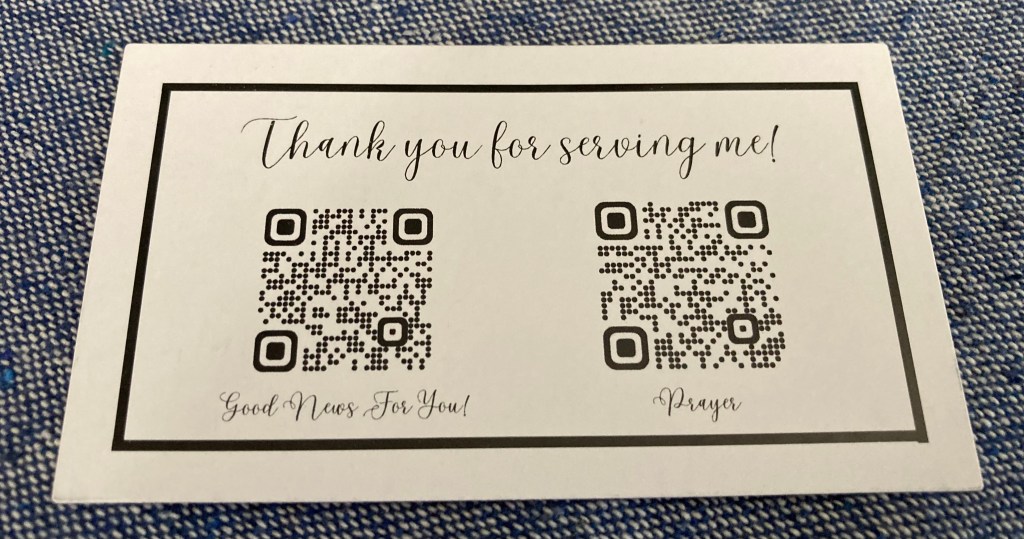
“Thank you for serving me!” is intended to be used with words and preferably after an offer of prayer or a short spiritual conversation in conjunction with a person who is taking care of you in any way. It can be left at a table with a great tip, in a ‘thank you’ card, or at a service desk. Kindness is key! I say this because many Christians will read this post and say, “I hate those things. It’s cowardly evangelism and highlights pushing one’s faith on another.” (Or some other thing. It doesn’t matter. Someone will complain.) They usually have a story about how someone left a million-dollar bill tract instead of a good tip. I agree. That’s wrong and a terrible witness. Once I saw a Chick Tract on the top of a urinal in a public restroom. Nope. I’m not touching that rascal! Just because someone does evangelism in a way you don’t like, it does not mean we should stop sharing our faith. I’m at the stage of life where I’m comfortable listening to someone tell me that they don’t like how I do something. I usually say, “Okay. Thanks for sharing!”
“Thank you for serving me!” has several ways you can share the gospel with others. I can see five ways so far.
The first way is to ask a server if you can pray for them as you pray for your meal. Have a friendly conversation with them, and on the way out, say, “Thanks for taking care of me today and allowing me to pray for you. Please scan this code to the right. Have a great day!”
The second is if you had a great conversation about the gospel or the Lord. They need some time to think or need some more information. Maybe you only had 3-5 minutes and needed 20 more. Ask them to scan the code to the left. It will take them to the Good News for You gospel page and provide more in-depth information.
The third way is to use the 3-Circles illustration on the back as a way to share the gospel. You can click on the link to learn how to use this tool. Walk the person through 3-Circles and ask them where they think they are on the illustration.
The fourth way is to thank them for serving you and share the code on the back. It’s a video that explains the 3-Circles gospel presentation in about 5 minutes.
The fifth way is to hand someone the card, say thanks, and go about your day. I put this one last because it isn’t the most ideal. Most people (especially the younger ones) are very familiar with QR codes and will know what to do with them.
ServeTract_v1FRONT
How would you use this card? What would you do if you could customize it? Share your comment below, or send me a comment through the ‘About Toby’ page.
I’ve got a couple friends who are “field testing” this new tool with me. Here’s a text from one below.
Photo by Miguel u00c1. Padriu00f1u00e1n on Pexels.com
Eccles. 4:12 And though a man might prevail against one who is alone, two will withstand him—a threefold cord is not quickly broken.
Six Principles in Starting a Band of Brothers
Prayer, 2. Discernment, 3. Focus, 4. Defined Time, 5. Size, 6. Purpose
Sometime in 2016, I took a church revitalization elective at MBTS as part of the requirements for a degree program. Dr. Rodney Harrison and another professor tasked the small class with starting a local leader’s cohort to meet once a month and to help me work through some church revitalization issues. We were to pray about who we should invite, design a discussion time, and put together a survey that would serve as a case study for discussion during the in-class portion of the seminar. I promised the group lunch, and a couple books as a ‘thank you’ and ensured they understood that it was for a limited time.
Six years later, that group is still meeting. A friend calls it the ‘Band of Brothers.’ A few guys have come and gone, books have been read, debated, loved, and one or two hated. But several principles have remained, and many lessons have been learned. I’ve learned how and why leaders need a group of like-minded friends who gather together regularly to laugh, cry, build up, encourage, and sometimes lovingly chide a brother. I’ve learned why many groups don’t last very long, the type of person to be invited, and why utilizing the seasons is your best friend in scheduling meetings and breaks.
My first exposure to a leader cohort was with a friend (he’ll remain nameless to protect his innocence), who took me to a Monday morning pastor’s meeting. He used to take me on evangelistic visits, to the hospital, and to widows’ homes to teach me about pastoral ministry. I’m forever grateful for his love for me! The visit to the Monday meeting was different. He wasn’t happy. He was aggravated while heading there, at the meeting, and on the way home.
“You didn’t appear to like that meeting. Why?” “They are a waste of my time. We get together every Monday, and everyone goes around the room talking about ‘how many did you have yesterday’ and ‘we had an altar full’ or ‘the deacons are upset.'” He said, “the bivocational guys can’t come because they are working, the guys who come discouraged leave discouraged, and the ones who are looking to brag gets their moment to shine.”
” Wow! He took me to about two of those and said, “there, you’ve been exposed. I’m not going anymore.” Hahaha! I don’t blame him. He didn’t find value, so he didn’t continue going.
Several years later our family moved to a large city and I was invited to a few cohorts. One was at a local associational building on Monday and was like the experience above. One difference was that I didn’t feel welcome. “Oh good. Another student.” Another group I tried to join was with church planters in the same area. Again, a no go. We were planting a house church and trying to start a network, but I had a difficulty relating to this group. I was also working 50-60 hours a week and trying to complete my master’s degree. Christy and I were using our days off and work schedule to keep the kids out of after-school care. It was a busy time!
I wasn’t off to a good start with my experience and view of cohorts. Dr. Harrison had his work cut out to convince me that this exercise would be worth my time in the long run.
The way he had us start the group was beneficial. He told us to ask the Lord for up to ten pastors who might be interested in learning more about revitalization and who would be able to meet for six to eight weeks. I didn’t realize it then, but this narrowed my focus considerably. In the pastoral leadership world, if I’m meeting guys for lunch, I’m probably going to attract fully funded and the occasional bivocational leader. Knowing this gave me limitations on whom to invite, and the number of guys in the group made it large enough to account for the 3-5 who would come for one or two meetings and drop out, making the group intimate and open for good discussion. These guys finished the assigned group with me and almost all of them said, “do we have to stop? Can we keep going and do another book next month?” While I’ve started several other groups over the years, this Band of Brothers that still meets has been an absolute blessing for me! Each month I look forward to meeting with them, laughing, learning, and loving each other in the Lord. Below are the six principles I’ve learned over the past several years in starting a Band of Brothers.
Principle One: Prayer (Matt. 7:7-8)Is the Lord calling you to encourage a small group of people in your leadership network? Maybe you are fully funded, bivocational, or simply seeking others of like mind. Begin with prayer. Ask the Lord if this is something that would benefit you and others. As a former church planter, I think in the way, ‘what could be?’ “I don’t have it, I need it, nobody is doing it, let’s start it!!” Ask the Lord. Maybe He will say, “come on, you have 47 other things going on right now, along with your third job. Let’s do those first.” OR “Yes! You’ve been seeking this type of fellowship for some time now. I love you. Let me help you find the right ones.” The Lord is good. He will lead you. Ask Him.
Principle Two: Discernment (who to invite and not) (Prov. 16:21) Let’s face it. Some people will kill a group. Why? 132 different reasons. They just will. Ask the Lord, and He will guide you. Ask a trusted friend about a guy’s character. Listen. Trust their judgment. We’ve all come home from a group meeting and said, “I’m never returning to that group! That one guy alienated everyone/talked WAY too much/told too many jokes/promoted himself endlessly/etc.” Invite those who want to learn, have the same concerns, need fellowship, and can meet when the majority are available.
Principle Three: Focus/Affinity (Acts 18:3) I like squirrel hunting with my friend in January. We use a .22lr because the leaves are off the trees, and we don’t care if we miss all day. We don’t set up in his field with shotguns and start blasting at the wood line, hoping something will fall. We are specific with our choice of gun, the round we use, and the animal we hunt. Be clear with whom you focus and what you are doing. The ‘Band of Brothers’ group started with revitalization leaders. We were all fully funded, at about the same stage of ministry, and could relate to one another very well. When you invite “whoever wants to come,” you get no one or the wrong group. What are you trying to do? Maybe you’d like to start an encouraging group for bivo guys who want help with sermon prep once a month? A cohort for new youth leaders in a metro area? A Zoom group for rural church planters? Add some focus before starting.
Principle Four: Defined Times/Seasons (2 Sam 11:1) Use the seasons to your advantage! Leaders will carve out time from January to the front of May and late August/early Sept through early November. I work within these bounds. This just works. When I start a group I like to let the guys know how long we plan to meet, and I do my best to keep within those parameters. If it’s a book group, we define the length, and everyone can agree to hang out for a certain time. Start on time and finish on time. Don’t let the one habitually late guy make you start late and punish everyone. Honor everyone who showed up on time by starting on time. Finish 5 minutes early and set the next meeting date before everyone leaves. This will help you get it on your calendar to remind everyone 3-4 days before the next meeting.
Principle Five: Size (Eccl. 4:12) Keep it smallish. 3-8 leaders are ideal for me. Anything over this gets impersonal and my personality is to remain quiet in larger groups unless zero leadership emerges. I shoot for 8-10 and generally end up with 5. I call it member math. I did the same thing when I was pastoring. If I needed 10 people to help with an event, I told the church I needed 20. I always got the number of people I needed. You are looking for a size that will comfortably gather at a local coffee shop or around a table at church.
Principle Six: Purpose (What are you doing and why?) (Ps 57:2) “Hey Toby, want to get together?” My first inner thought most of the time is, “why?” or “what do you want?” It’s probably yours too, if you are honest. Tell them why upfront. Take away the “why” and “what do you want.” (The same thing goes for those texts you receive from a church member saying, “we need to meet.” About what? Why? 90% of the time it’s not good. Church members, tell your pastor what you want before you meet!! Pastor, ask your member what they want!) Be very clear about what you are doing and why you are doing it. Give them time to check their calendar to accept or to graciously decline. Define the follow-up date and mark it down on your calendar. Follow up with the stragglers once, then move on. They’ve ghosted you. It happens.
When inviting someone, say, “hey brother, I’m praying about starting a cohort for leaders once a month in the afternoon at the local coffee shop. I’m praying for five guys who would like to go through a leadership book and encourage each other for an hour and a half. Here are the two books I’m thinking about. Here’s who I’m planning on inviting… Can you pray about it and let me know next week? Can I follow up with you if I don’t hear from you?
Eccles. 4:12And though a man might prevail against one who is alone, two will withstand him—a threefold cord is not quickly broken.
Dr. Kendall’s passion for the Word of God is encouraging! I’ve only read a few articles and the above books, and I’m seeing that he uses several of the same stories throughout his work that I’m finding to be encouraging. Some may say, “he’s already used those, I wish he’d find some new ones!” I find this helpful and instructive! The points are being made, driven home, and I’m better able to apply the principles to my own life for application.
One of his repeated points/principles is the application of God’s Word in our lives. In Holy Fire, Kendall says, “the average church leader today spends four minutes a day in prayer.” (p37) Four minutes! When he retired from Westminster, he was asked to give a 10 minute sermon to 100 ministers at the Holy Trinity Church in London on prayer. He said, “I took the whole ten minutes to urge every minister there to spend at least one hour a day in prayer. Two hours is better.” (p120)
Lloyd-Jones and Kendall both followed Robert Murray M’Cheyne’s Bible reading plan. They rightly believed that both the Word and Spirit are needed for formation and growth. Regular prayer allowed one the time to spend with the Father to learn from and listen to the Spirit and regular Bible reading formulated one’s Biblical mind toward correct doctrine and theology-a way to keep within the spiritual bounds. MLJ said, “The Bible was not given to replace the miraculous, but to correct abuses.” (p153)
I was listening to Dr. Craig Keener the other day while driving and his words struck me. I couldn’t get them out of my head. He said that when he came to Christ out of atheism, he got serious about God’s Word and started reading 40 chapters of the New Testament A DAY! He was reading the NT through once a week! God has gifted Dr. Keener in an incredible manner. One of the reason’s he can explain, share, and encourage through God’s Word so heartily is his love of reading God’s Word. One of my friends and mentors, Dr. Tom Johnston, posts a picture of his Bible reading each day on Facebook. One of his favorite things to do is to handwrite scripture. Deuteronomy 17:18 says, “And when he sits on the throne of his kingdom, he shall write for himself in a book a copy of this law, approved by the Levitical priests.” A good friend of mine uses the YouVersion Bible app and allows it to help them through a scripture reading plan. Early this year I started using the BibleTracker app to remind me where I am in my personal reading.
I love the picture of the man reading his Bible above. Do you see how actively he is reading? He looks like he woke up ready to read! I want a heart toward the Lord that says, “here I am. Your servant is listening. Speak to me through your Word. Allow me to listen to your Spirit throughout the day.” May this be our heart and desire as we open God’s Word with expectancy. Who are you reading/watching/listening to that is encouraging you in Bible reading? Do you use any helps/tools to keep you in God’s Word? Do you find it helpful to read with a friend, study group, or whole church?
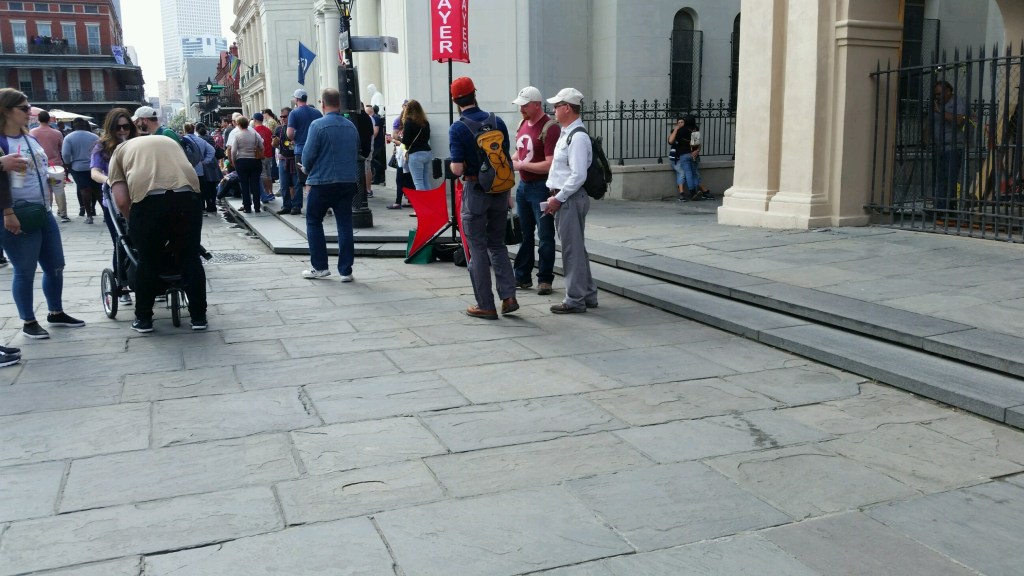
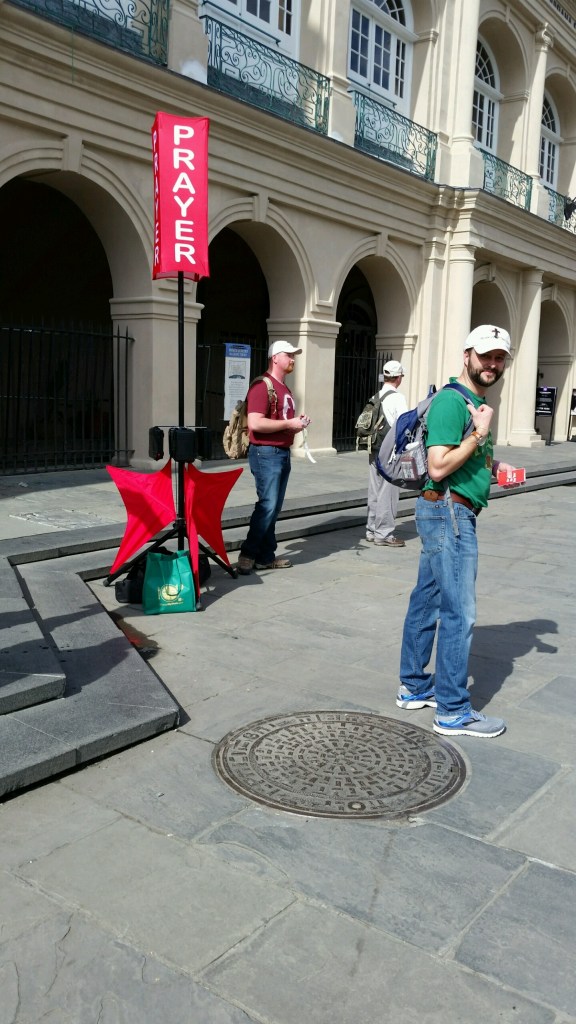
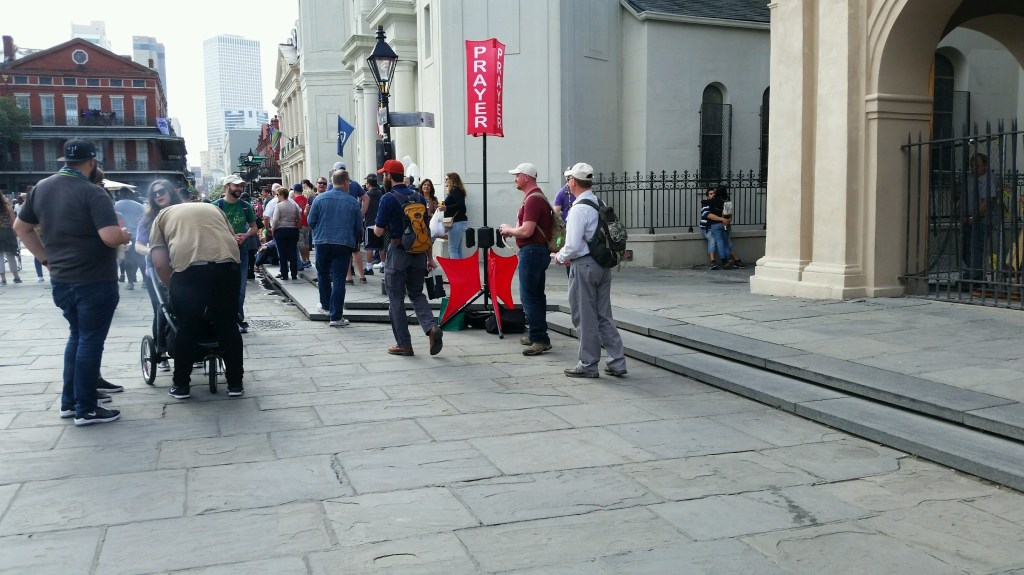
Several years ago I purchased a prayer stand for use at events. It’s highly visible, does a great job letting people know what you are doing, and helps you organize gospel material. Here are a couple videos that show an example of what you can do on your own with the prayer stand: Prayer Stand Conversation; Evangelistic Praying.
I’ve attached a training guide that I put together to accompany my prayer stand. I’ve lent it out to many pastors and churches and in the process I’ve learned a few tips that I share in this document.

















 Toby DeHay