Christy and I took a late July vacation to Maine and finished the trip visiting family in Massachusetts. While in ME, we saw many new places and sampled some amazing local food! We spent time in Ogunquit, Wells, York, and Portland followed by a few days with our family in Carver MA (Plymouth). We failed to get any pictures from our night at the Ogunquit Playhouse, but it was fun! We saw Kathleen Turner in a production of A Little Night Music.
Above is a screenshot of the Sayward/Wheeler House in ME. We toured this 18th century home for $10 each. It was amazing! It sits overlooking the York River and had one family (their descendants) living in it from 1719-1977 when it was given to the historical society. Inside the home is furniture, photos, and other items that were there before the American Revolution.
Fort McClaryInside the fort looking toward the guns and harbor
Christy indulged my interest in history a few more times throughout the trip. The above pictures are of Fort McClary. This fort has protected the approaches to the Piscataqua River and the southern end of ME (Kittery) for over 275 years. It was active through five wars and is named after Revolutionary War hero, Major Andrew McClary, who died at Bunker Hill.
The fort has huge pieces of granite scattered about that show where the defensive wall would be had it been finished.
We spent time hiking…
Visiting beaches…
Visiting lighthouses…
Visiting Plymouth…
And spending time with family…
G
This was an amazing trip! Christy spent so much time researching where I could eat (due to my allergies) and Maine offered so many GF options. If you ever go, be sure to research which airport you want to fly into. There are several around Boston and it might be worth it for you to fly into one like Manchester in NH or Providence RI. We opted for Manchester this time. It was straightforward to navigate and we found the car rental place easily.
“Set a guard, O Lord, over my mouth; keep watch over the door of my lips!” Ps. 141:3
I had a conversation the other day with a friend in a coffee shop. I shared some sensitive things about myself and thought, “I wonder who can hear me right now?”
This reminded me of a time when I got yelled at in a restaurant in Kentucky. As I thought about that time, I thanked the Lord for what He taught me in that experience. I decided to write my thoughts down because I’m hoping to accomplish a few things:
I want to encourage others with what I’ve learned and challenge you to think about how the Lord is growing you through conflict.
This one is selfish. I want to look back on my thoughts and remember what happened as I’m prone to making the same mistakes.
As you read this post, it’s my hope that you resonate with my story, but in a grace-filled way. As you read you might agree with me that the young man in the following account misbehaved. You probably have a story like this too! Maybe someone misbehaved and yelled at you or maybe you’ve done it to someone else.
A few years ago while working with the Baptist Convention I was having lunch with a Director of Missions (DOM) friend and two pastors at the local Mexican restaurant. We sat side by side in a booth by the window and had been meeting for several months in varying representations of the group working to help a pastor and the dying church he served work toward health. We had reached the portion of working through some language in the guiding documents when I looked up and a young man was standing at our table. He was not our waiter and he was visibly agitated.
Before we could say anything to him, he told us he had been sitting in the booth behind us and was listening to our conversation. His displeasure over our conversation was evident in his tone, choice of words, and posture. He was unhappy that our conversation did not include enough prayer. He was disappointed in the way we spoke about these new documents. His displeasure also included the perceived spiritual tone of our conversation. (Not enough spirituality and too much business.)
When he finished, I tried to respond with kindness and grace. I asked him his name and where he attended church. He gave us his first name, but not his church. I then told him that what he heard was a snippet of all we had been doing. I explained that there had been much prayer throughout this process and that these documents were necessary for this church. I explained that as he listened to only a portion of our conversation, he was ignorant of the context of the situation, and our relationships to one another. I told him that it was not fair of him to share his opinion unsolicited, and since he stated he was a Christian, he could have given us the courtesy of telling us where he went to church. We weren’t enemies and I was trying to make common ground. After he left, we stared at each other and asked, “What just happened?” We stopped, prayed for the young man, and continued meeting.
As my DOM friend and I recounted our experience, neither of us thought what we said was offensive, out of the way, or sinful. We did have some takeaways that informed our next work-related restaurant meeting as well as good reminders that I try to remember when in public:
People listen whether you want them to or not. They might be eavesdropping on purpose or maybe they can’t help it because you and your friend are inadvertently louder than you realize. Something else was going on in this guy’s life and he used the opportunity to lash out at us. But as my friend and I thought about it, we decided to always look for the most empty area in the restaurant moving forward. We asked ourselves, “Were we in sin? Did we say anything that we should not have said? Were we insensitive to others?” I have a friend who prays the gospel as he asks the Lord to bless his food at the restaurant. He said, “I’m not sure if anyone is listening, but if they are, they’ll hear the Good News!” People are listening. Let’s not sin in our conversation or cause them to sin in listening to it.
Sometimes other people sin against you and you might not know why.Give them grace and learn where you can. What causes someone to insert themself into another’s conversation unsolicited? I don’t know! While in Massachusetts last month my friend’s daughter asked how old we were and some dude stopped and started asking us all our ages and then just walked off. WHY!?!?! So weird. I think a better question was one my DOM friend asked. “What is going on in that young man’s life that would cause him to say those things in that way? We need to pray for him and his heart. He is probably going through a lot right now and we need to give him some grace.” I’ve had plenty of people angry with me. Most justified and some not. The older I get, the better I am at listening to the anger and trying to apply what I can so I don’t make the same mistakes. Remember, there’s usually a kernel of truth behind what people say in their anger or rebuke of you. Find the truth and learn from it.
Keep sensitive conversations private. This one was not sensitive. I had a 100 like it in my time with the Convention and never had another person rebuke me for doing my job. Sometimes conversations are best had in private, in the back booth with no one around, or in hushed tones. Ask yourself, “Am I in sin by even having this conversation?” “If someone were to overhear, would I cause them or someone else to sin?”
Jesus calls us to kindness, compassion, and care. We lovingly (also a little shocked) listened to the young man as he shared with us. We didn’t yell back. No one got up in their preferred fighting stance (I like the bobbing video game character). I also believe it was caring for me to let him know that his comments were unwarranted and unwelcome. As we prayed for him, we talked about how we had no idea what kind of hurt he experienced in his church life. We were ignorant of his walk with the Lord and his maturity level. We asked the Lord to care for him, to allow his heart to receive forgiveness and love. Sometimes being kind and compassionate in public is not saying everything that comes to mind. I love jokes, puns, and sarcasm, but what are others hearing outside of my immediate context? What does our vocal tone say to others who may be listening in?
I think about this young man from time to time. I hope he is healing from whatever or whoever hurt him. I thank the Lord for that experience. I certainly wouldn’t ask for it, but it provided me with a good reminder that others are listening to what I say in public. What about you? Have you had an experience like this? Even if you were wronged, how did you use the experience to grow in your love for others and the Lord? How did you go about redeeming a bad situation for His glory?
I took the transcript of Terrance’s message and inserted it into ChatGPT, and out came this summary! I love his premise that both the home and the church are needed in the healthy discipling of kiddos. Check out the entirety of the podcast at your convenience.
The article emphasizes the importance of family discipleship in a post-Christian, social media-saturated culture. It identifies two types of churchgoers: “Program Pete,” who relies entirely on church programs for discipleship, and “Parochial Pat,” who prioritizes family happiness over church involvement. The article argues that effective discipleship requires a partnership between the home and the church, as both play crucial roles.
The home is the primary environment for discipleship, where parents are irreplaceable in their roles. The church complements this by offering community, support, and intergenerational relationships, which help both children and parents grow in their faith. The article calls for intentional disciple-making that is personal, relational, and aligned with the Great Commission. It suggests that churches need to equip and encourage parents, and build a culture that reflects gospel values through training, counseling, and family involvement in church life.
In summary, the article advocates for a vibrant partnership between the home and the church to effectively disciple young people, emphasizing that both environments are essential for nurturing faith and spiritual growth.
17 Moses’ father-in-law said to him, “What you are doing is not good. 18 You and the people with you will certainly wear yourselves out, for the thing is too heavy for you. You are not able to do it alone.
Ex 18:17–18
While living in Kansas City, MO, we practiced house church with a group of believing friends. For the first several years, we held the meeting in our home, cooked a meal each week, and took care of all the preparations for our gatherings. However, we eventually realized that we were not effectively utilizing our group members to share the workload.
Quickly, group members began hosting in their own homes and inviting their friends. We utilized events such as the Super Bowl and July 4th to invite friends who wouldn’t typically attend our group and provide points of rest from our regular rhythms. We discovered that others were eager to help and were invested in keeping the group healthy and intact.
Reflecting on our Wellspring house church and the lessons learned over the years, I compiled a short list of five ideas for group leaders to implement to maintain health and reduce the stress of leading week after week.
Enlist a Co-Leader for Your Group
If you’re leading a group alone or with your spouse, consider enlisting a co-leader or a couple to co-lead with you. Begin by asking the Lord to highlight people who have demonstrated leadership capabilities and faithfulness. My wife and I co-lead with another couple, and it’s been amazing! We bounce ideas off each other, share leadership responsibilities, and grow closer as friends while strengthening our relationship.
Utilize as Many Homes/Meeting Places as Possible
Preparing your home for guests every week can become tiresome. My wife and I recently started rotating the hosting duties to our home. My wife remarked, “This will help keep the kitchen table free from clutter!” I couldn’t agree more. However, the stress mounts when it’s a weekly occurrence, and life’s pressures collide at the most inconvenient times. Guests might not always be as gracious as you hope, or work commitments during busy seasons could make it challenging to host.
Utilizing another home or a third place (such as a restaurant or coffee shop) can alleviate some of this pressure. Sharing the hosting burden also demonstrates love and care for those who lead and teach. Group members often forget the effort involved—cleaning the home, preparing discussion questions, selecting songs, and reaching out to absent members. Meeting at a different location for even a month could alleviate some of this pressure.
Develop Disciples/Leadership Apprentices
Whether you have a co-leader or are praying to find one, developing disciples or a group apprentice should be a priority. In our group, which operates with co-leading couples, our goal is to develop leadership apprentices. We aspire to see new groups formed and neighborhoods impacted by the gospel. Encouraging members to take on teaching responsibilities helps hone their skills and lightens the load for us.
Build-in Breaks (seasonal, planned, group activity, holiday)
Plan breaks around holidays, group activities, fifth weeks in a month, or even designate a month off during the summer. Leaders can step back by pouring into disciples who can lead in their absence, inviting guest speakers, or arranging for another group to provide leadership assistance. Strategically planning these breaks throughout the year can offer much-needed respite.
Practice Personal Spiritual Disciplines and Healthy Home Practices
When my regular time with the Lord is interrupted due to mismanaged schedules or disrupted routines, I find myself more susceptible to stress. This added pressure doesn’t help when it’s group night, and I know I haven’t been setting the best example.
Donald Whitney and Richard Foster have been invaluable resources regarding spiritual disciplines. While it’s essential to learn, it’s even more crucial to put that knowledge into practice, ideally within a supportive community. Take time to assess your personal spiritual health and commit to growth in specific areas this year.
Additionally, consider your home practices, including family and work schedules, morning, evening, and weekend routines, and regular indoor and outdoor chores. Automating tasks such as bill payments and using delivery services can save time and streamline responsibilities.
In the previous post I wrote about the first three principles I learned:
Recognize My Need to Love Jesus
Intentionality-Being Purposeful in My Pursuit of Jesus
Hunger-To Pursue Him
Here are the remaining principles:
4. Practice Spiritual Disciplines
I alluded to this in the previous post but found comfort in a renewed focus on the disciplines and how others practiced. Personally, the Lord gave me a new hunger for His Word, prayer, and learning to listen to His voice. After reading RT Kendall and listening to Craig Keener’s story, I began reading large chunks of scripture daily. The Lord was waking me up as early as 3:30 am and I began taking 2-3 hours to read, pray, and listen to the Lord before I began my day. After 20+ years of ministry, I experienced a deep hunger for Him that resulted in a love for the basic disciplines believers have known for centuries.
It would be dishonest to say I didn’t love His Word, pray, or listen to the Lord before this experience. I loved reading the Bible and spent time in it daily. I prayed daily but rarely listened to the Lord. In His goodness, He would make things plain to Christy and me, but it wasn’t due to our diligent listening and seeking the Lord.
Rather than looking for a quick answer to my pressing questions, the Lord allowed me to rekindle my love for Him as I read the Bible. At the time, I was reading the New Testament once a month. This equaled about 10 chapters a day. I began to hear His voice as I prayed with a small group of guys on a 5 am Zoom call once a week. Often I would pause my work, close my eyes, and pray. I felt a closeness I’d never experienced. Psalm 61:1 says it so wonderfully:
Hear my cry, O God, listen to my prayer
Psalm 61:1
While this Psalm is a lament, the writer expresses how God protected His people in the past, shows God hears our prayer, asks Him to prolong his life and his line, and tells how He will be praised. (Barry, John D., Douglas Mangum, Derek R. Brown, Michael S. Heiser, Miles Custis, Elliot Ritzema, Matthew M. Whitehead, Michael R. Grigoni, and David Bomar. Faithlife Study Bible. Bellingham, WA: Lexham Press, 2012, 2016.)
Practicing these spiritual disciplines enabled me to slow down and learn to hear the Lord in His timing and way. They helped me build confidence as I learned to hear His voice. There would be several times when this proved incredibly helpful as we began to step out in faith to follow His leading to Oklahoma City.
As the days turned into months, I learned how the daily, habitual practice of spiritual disciplines helped clarify my questions to the Lord. I began to more clearly see how He worked through a process rather than a single event (not that He doesn’t).
Since moving to OKC, I’ve encouraged several people waiting to hear from the Lord. To a person, their intake of Bible reading, prayer time, listening, and other spiritual disciplines has increased dramatically. Each person, while struggling through the wait, has grown spiritually and is encouraging others to do the same.
5. Praying for the Supernatural
This was new to me/us. Sort of. Looking back, I’ve always believed God can do and does things things that are hard to explain. Before our experience with the gifts, I heard God’s internal audible voice, we’ve seen Him provide for us monetarily in unexplainable ways, and we’ve seen Him answer specific prayers in miraculous ways. Somehow these were seen in a different light; as if they should certainly be prayed for and expected, but not really. (Only in times of emergency, special circumstances, or tradition-approved methods.)
As I listened to the Lord, I began becoming more open to prophetic words from believers, asking God for and paying attention to dreams, and trusting God to show us things that only He could do.
As we began to “earnestly desire” and “test” the prophetic words we gratefully received from others, we not only learned about a gift that was foreign to us, we began to see the heart behind this gift was love.
I remember one brother sharing with us that God would be moving us from Ky to Oklahoma. Before our meeting, he had written down what he thought was the town to which we would move and shared it with us. He was so kind and loving toward us, but his specific word was wrong. In the Lord’s kindness, He allowed us to diligently search for Him and test this word by visiting the town. Our spirits agreed that this town was not the place we were to land despite how everything made sense on paper.
In learning to listen through a prophetic word we got to practice how to biblically test a prophecy while not casting the gift or the love the brother had for us to the side. We learned to carefully ask prophetically gifted people to pray for us and share anything the Lord may be impressing on them. The most encouraging prophetic word came from a brother who had no idea who we were. It felt like he read Christy and I like a book!
6. Pay Attention to Circumstances
Christy and I saw the Lord working through circumstances with our church family and my work. We transitioned from one church to another in Kentucky and were having difficulty finding a body of believers who were open to biblically practicing spiritual gifts. While the church we were members of was active, we didn’t feel like we fit in. I believe this was not their fault. This church loved the Lord, had a strong preaching, music, and outreach ministry, and loved us from day one.
The Lord used our church experience in tandem with the above to provide more evidence that He was doing a major work in our lives.
At the same time, I knew my time with the convention was going to be coming to an end. I had been working through some difficult issues at work while at the same time realizing that I couldn’t openly share our desire to grow in the gifts with most of my coworkers or churches I served.
I’m incredibly grateful for my time with the convention, my coworkers, and church leaders, but we felt the Lord was even using this as a confirmation that He was preparing us for the next thing.
7. Move Forward with Next Steps
As Christy and I listened to the Lord for almost two years before moving, we learned the importance of taking the next step. As we stepped out, we learned that some of our actions were not what the Lord wanted and He either kindly stopped us, or let us keep moving forward for a time to learn from Him. His correction was always gracious and kind.
We learned that when we step out in faith and our actions are bathed in prayer and trust the Lord will guide us. He was teaching us the importance of the process. The process of learning to listen in a way where we could recognize His voice and discern whether we needed to wait or act was coming through patience and practice.
As we got closer to moving, our next steps looked much like a checklist. Each time got ready to check off the next box, we had to learn a lesson of faith and trust that was new to us. We learned to cry out to Him in desperation at times. We learned to trust each other’s ability to hear from the Lord when one of us was not sure. We learned that stepping out in faith isn’t all that comfortable.
For us, the next steps throughout this process were often big ones. They included when to put the house up for sale, in whom to confide about our situation and when to do it, which home in OKC we bid on and which ones to pass up, and what to do about my job search once we arrived. These drove us to pray again and again. We got better with patience and a little better at trusting the Lord’s timing.
4“Hear, O Israel: The Lord our God, the Lord is one.5 You shall love the Lord your God with all your heart and with all your soul and with all your might.6 And these words that I command you today shall be on your heart. 7 You shall teach them diligently to your children, and shall talk of them when you sit in your house, and when you walk by the way, and when you lie down, and when you rise. 8 You shall bind them as a sign on your hand, and they shall be as frontlets between your eyes. 9 You shall write them on the doorposts of your house and on your gates. (Emphasis mine)
In late 2021 the Lord began working on our hearts to learn more about Him; particularly the gifts of the Spirit. In 2022 we began reading more books, listening to podcasts, and even took a discipleship course together on Saturdays for several months.
Christy was several years ahead of me in learning about the gifts, but I began asking God what it would look like to have a hunger and desire for Him that I’d never experienced. His answer to my prayer seemed to be “Listen to me.”
While I thought I knew what that looked like, I had much to learn. As I prayed, read the Bible, talked to others, stepped out in faith, and did all the Christian things, I learned that listening to the Lord needed to include time and patience. Below is a short list (two-part blog post) of what I’ve learned from listening to the Lord on this journey. The Shema has been an intricate part of my journey. Loving the Lord with all my heart has been challenging, repentance-producing, and is continuing to help me grow as a follower of His.
I hope learning from us is encouraging to you! If we can clarify anything, or our story resonates with you, please connect with me through my site. I’d love to chat virtually and encourage you as you listen to Him too!
1. Recognize My Need
“You shall love the Lord your God with all your heart and with all your soul and with all your might.”
Deut. 6:5
I started with my need to love Him. To follow Him more closely. To grow, not as a leader, but as a follower. We fall into routine and forget that God wants us to have a deep relationship with Him. It’s through the Son’s sacrifice we can have it and the Spirit’s indwelling in us gives us the ability to see this need and act on it.
The above is why men like RT Kendall and Craig Keener were so helpful to me last year. Their hunger for more of the Lord showed me that others feel this way too. These brothers also helped me think through the implications of what needed to change in my life and how I could practically begin to put spiritual hands and feet into this growing hunger for the Lord.
2. Intentionality-Being purposeful in my pursuit of Jesus
“Hear this, O foolish and senseless people,
who have eyes, but see not,
who have ears, but hear not.
Jeremiah 5:21
The context of this passage implies effort and action. I picture a mom or an early elementary teacher bending down to look their child/student in the eyes and saying, “I’m going to need you to look at me and repeat what I’m saying to you.”
7 You shall teach them diligently to your children, and shall talk of them when you sit in your house, and when you walk by the way, and when you lie down, and when you rise. 8 You shall bind them as a sign on your hand, and they shall be as frontlets between your eyes. 9 You shall write them on the doorposts of your house and on your gates.
Deut. 6:7-9
Deut. 6:7-9 provides evidence of action. We are to teach, talk, bind, and write. Being intentional means doing something! For me, it means making a plan and then following it! Doing so shows Christian maturity, growth as a disciple, and not simply taking in biblical meat, but devouring it in a way that nourishes the believer to provide strength, encouragement, repentance, and growth.
Dave Ramsey fans know this saying all too well:
“Adults devise a plan and follow it, children do what feels good.”
Dave Ramsey
My pursuit was to listen while recognizing my need, but needed to include action. I began to investigate scripture with a heart to hear what the Spirit says in the Bible and to learn how to listen to what He says to my heart through the Spirit. I read scripture (1 Cor. and Romans 12) with a “what if this is true” attitude. This led to me thinking, “If this is true, what do I need to do or change about my walk with the Lord?”
This is the part that frightened me. What are the implications of listening and obeying? In what ways is the Lord going to change me? What habits, teachings, attitudes, and thoughts need to be broken? What new biblical principles need to be put in their place? And more selfishly, what will people think of me? How many friends am I going to lose? I had a good friend tease me, “You’ve gone Pennycostal!”
Intentionality is a dangerous commitment. It does come with strings. The strings of obedience and repentance aren’t simply abstract Christian words, but demand action. Looking back on my walk with the Lord, I remember many times when I recognized my need to do something but stopped when I knew the next step was being intentional toward obedience and pursuing that which the Lord was calling me into or toward.
What’s funny is that we expect the same from others and God. Nobody believes they are heard when the one supposed to be doing the hearing takes zero action. Sometimes the action required is difficult and takes many steps and time to complete. Other times the action is simply listening and offering a kind word, a smile, and a hug.
Hear, O Lord, when I cry aloud;
be gracious to me and answer me!
Psalm 27:7
3. Hunger
I learned that once I recognized my need and began to intentionally pursue the Lord He gave me a hunger to pursue Him. One problem we have as imperfect people is that often our sin gets in the way of our pursuit of the Lord. The Shema is the perfect prescription to counter the effects of our sin. We are to:
love the Lord your God with all your heart and with all your soul and with all your might. (5)
Remember that the words of the Lord are written on your heart (even more so since New Testament believers have the very Spirit of God living inside them!). (6)
Teach God’s Word to our children and talk of it as we come and go. (7)
Keep His Word before us night and day (bind them as a sign on your hand and as frontlets before your eyes). (8)
Dedicate our homes to the Lord not in a ritual-like manner, but in a manner of instruction, correction, and encouragement. (9)
This desire, or hunger to hear from God is often squashed as believers mistakenly think they need to be in the “very center” of God’s will to hear from Him correctly. They might believe an equal amount of Bible reading, prayer, and church attendance will provide the sacrifice that sends up a pleasing aroma to God that forces His hand to reveal His perfect and specific will for an individual.
This hunger is nothing more than a deep desire to know and be known by the very God who provides life, sustains us throughout our mountain highs and valley lows, and provides the grace needed as we traverse deep spiritual hurt and depression that may last years.
As a deer pants for flowing streams, so pants my soul for you, O God.
Psalm 42:1
O God, you are my God; earnestly I seek you; my soul thirsts for you; my flesh faints for you, as in a dry and weary land where there is no water.
Psalm 63:1
My soul yearns for you in the night; my spirit within me earnestly seeks you. For when your judgments are in the earth, the inhabitants of the world learn righteousness.
In May of 2013, our family moved to Kentucky to pastor a rural church in need of revitalization. As we settled into a new rhythm of life, I quickly began to learn about the need to set boundaries between ministry “work” and home/family life.
These two areas are often blurred for those serving in ministry, whether it be in a fully funded or volunteer role. Ask any Christian leader and they will tell you they really enjoy their ministry. For many, their ministry is a calling. They really enjoy using the gifts that God provided them for His glory among His people.
As our family found our new rhythm, I began to take on more one-on-one discipling appointments, shared the gospel in our community with others, got involved in a local food ministry, and began collaborating with other leaders throughout the state. At the same time, our oldest was becoming more and more active in extra-curricular activities at her high school and I began doctoral studies.
I learned that there are limits to the number of “yeses” one can hand out. Too many “yeses” can lead to burnout. Too many “no’s” can lead to apathy, isolation, or laziness.
Too Many “Yeses” Currently, I’m trying to do better at catching this on the front end. I can meet X many people per week, prepare ahead of time for Y many meetings, and give up Z many hours of family time before a problem begins to surface. Understanding my boundaries and generally sticking to them saves me from handing out too many “yeses,” which drives me toward spiritual and physical unhealthiness. Too many “yeses” make me uncreative, less thoughtful of others, spiritually dry, and tired.
Things to think about:
What are your personal/family/work limitations?
How do you recharge? Are you naturally an introvert, an extrovert, or a mix like me (60/40)?
Are you taking into account the rhythms of your various calendars (Winter/spring/summer/fall, family, church, work, etc)?
Do you have kids at home, are you single, an empty-nester, or other?
What time of day do you do your best work? I tend to be more productive from 6a-11a than in the afternoon/evening. Most of my heavy-thinking and production-related tasks are best done in the morning. This also means I can’t start work at 6a and keep going strong every day until 9p.
Too Many “No’s” I don’t struggle on this end of the boundary spectrum. Some do and I know some people who would place themselves in this category. They are often hard to get in touch with as their phone boundaries are rigid and often unreasonable. They may verbalize their availability to you, but what you hear is the opposite. Their spiritual giftedness is apparent, but they are not the ones who are quick to lead or even show up at a gathering where they can encourage/equip others in their faith. Their habitual “no’s” often come from a place of burn-out, past or present family issues, or other issues. Too many “no’s” may indicate that a person needs counseling and integration into a healthy community of believers.
Things to think about:
Do you find yourself using the settings on your phone to stop calls/texts/notifications to isolate yourself from others?
Do you find yourself talking about making boundaries enough that it causes people to assume you are much more busy than you actually are?
Do you go weeks/months without meeting with other believers outside of a Sunday gathering?
Resources:
Cloud, Henry, and John Sims Townsend. Boundaries: When to say yes, how to say no to take control of your life. Grand Rapids, MI: Zondervan, 2017.
Several years ago adversity came my way from a fellow believer. It would be nice to say, “I took the high road and honored the Lord with my actions.” I did neither. I took the low road and damaged my relationship with this person AND dishonored the Lord with my actions.
I’ll never forget the feeling I had once I realized how my words and actions hurt this person. Yes, they were being adversarial, but I did not handle it in a godly manner. To this day, it’s the number one embarrassing thing I’ve done.
While I don’t want to experience a repeat of my stupidity, I look back with a thankful attitude of learning, forgiveness, and a stinging reminder that honoring the Lord through adversity is a necessity! Think about a time that you NEVER want to repeat, but are glad (sort of) that it happened. This was it for me.
53 But the people did not receive him, because his face was set toward Jerusalem. 54 And when his disciples James and John saw it, they said, “Lord, do you want us to tell fire to come down from heaven and consume them?” 55 But he turned and rebuked them. 56 And they went on to another village.
In Luke 9, Jesus’ disciples responded to adversity by asking the Lord if they could call down fire from heaven and consume those who did not receive Him. We’d all like to think we are better than that, but let’s be honest, we simply aren’t.
Jesus simply rebuked His disciples and moved on to another village. He knew the hearts of the Samaritans in that village were hard. He also knew His disciples needed to know this type of behavior was not acceptable.
A healthy leader has probably done the same thing as me at one time or another. The difference between a healthy leader and an unhealthy one is that the healthy one has repented, made it right with the one offended (if possible), and has learned from his/her mistake. I’ve eaten plenty of humble pie, but this slice was especially large!
In my case, adversity humbled me and showed me why I needed to deal with the situation in a biblical manner and not a worldly/impassioned/impulsive one. I talked with the person I offended, repented of my sin (and even called together a group of leaders in the church and let them know what I’d done and let them know how I repented and was working to move forward), and although we won’t be dining together, we can say hello and hope the best for one another.
Reflecting on adversarial people, I learned that some:
aren’t happy no matter what you do. They simply don’t like you. These could be described as antagonists. This person needs prayer, a loving smile, and some encouragement. We don’t have to invite everyone over for coffee or dinner, but we can be kind and loving toward them.
had a really bad day (or several days/weeks/months) and need some grace. Offer some prayer or quietly leave the conversation/area and later you can let them know you care.
are struggling with addiction. We had someone upset with us this last year. It turns out they were trying to kick an addiction and didn’t handle the situation very gracefully. They apologized and made it right.
have an unhealthy bend toward controversy/conversational aggression. If you haven’t experienced this person, you will! While talking with them you will feel like you are being attacked, provoked, baited, or many other unhealthy feelings. In extreme cases I’ve simply thanked them for the conversation and exited abruptly. Most of the time it’s polite to say something like, “hey, this sounds like something you are very passionate about. I don’t know much about this topic. Can we chat again when I’ve learned some more?” Or, “can we take this issue to the Lord right now?” After you’ve prayed for the issue and the person, feel free to move on to another physical location or change the subject.
are naturally sarcastic and don’t know that they just hurt you or are being adversarial. What we label as hurt might be called joking, being silly, or teasing by the one who hurt you. Sometimes teasing goes too far and it becomes hurtful or it never was teasing, it was a way for them be hurtful and then blame you for the pain you feel.
Healthy leaders know adversity is coming. Dealing with it with scripture in view and time in prayer is a must!
15“If your brother sins against you, go and tell him his fault, between you and him alone. If he listens to you, you have gained your brother.
If you do a quick Google search, or even better, search Amazon, you will see a myriad of material written about servant leadership. Licioni, Maxwell, Covey, Collins, etc. I suppose you could read a book a week on servant leadership for several years and still not exhaust the written material available on the subject. As I read through Luke, Jesus says the following:
Whoever receives this child in my name receives me, and whoever receives me receives him who sent me. For he who is least among you all is the one who is great.”
Jesus uses the phrase “gentle and lowly” in Matt. 11:29
Take my yoke upon you, and learn from me, for I am gentle and lowly in heart, and you will find rest for your souls.
Matt. 11:29
These indicate an attitude of servanthood. You before me. How can I serve rather than be served?
Some lead with a heavy hand thinking people will respect their “strong” leadership. I know a guy who said, “It’s my job to make sure the right people are in the right seats on the bus. Since I’m driving the bus, they can listen, or get off the bus!” He may not have realized his comments and attitude were keeping healthy believers off his bus. HeavyHand needed to be in charge.
Some think they are leading well, yet micro-manage every decision being made. The believer being led feels like everything they do is wrong and the only one who can make the correct decision is the micro-manager. MicroManager’s needed to make all the decisions.
Some provide management, but no leadership. Everything is reactionary. Frustration sets in on both sides, one gets burnt on following a manager (being managed) and the other gets burnt on managing. Manager’s needed to feel needed at every turn.
It’s all very self-centered. Jesus’ words to his disciples in Luke 9 had to have been a shock. Here they are, arguing about who is greatest among them and Jesus takes a nearby child, sets him/her before them and says, “whoever receives this child in my name receives me…he who is least among you all is the one who is great.”
Servant leadership is leading with the least of these in mind. This leadership helps the “least of these” not only see their value before the Lord but places them in a position to do well and flourish.
Servant Leadership brags on others. It includes the introvert in conversation and allows the uber-extrovert space to go overboard from time to time. It shows grace when undeserved, kindness rather than the snarky comment and brings a brother or sister alongside to watch and learn rather than expecting them to understand on their own.
A servant leader plants today for future growth tomorrow. The servant leader sees a glimmer of potential in another believer, not because of what you can see on the outside, but from how you know God loves to give His children good gifts and that His gifts transform His children into what He wants when He wants.
Servant leaders place others above themselves and help others as they mature in their faith; providing them time and practice to grow.
The servant leader is neither heavy-handed, nor a micro-manager, nor a manager. He/she is a servant. They fall at the feet of Jesus and ask Him how to love and disciple the high achiever, the anxious friend, or the chronically late friend.
Servant leadership takes into account the fact that each person is designed as a unique image bearer of God. Those who are believers have gifts that have been given to them for use in the body. Those who are not believers (and believers too!) have natural talents and some they have honed from years of practice and skill. Healthy leaders recognize God made people in a variety of ways. They desire to serve and not be served. They think of others first. They are desire to be “gentle and lowly.” Healthy leaders are Christ-like.
During a morning devotion last week, I was reading Luke 8-10. In Luke 8:15, Jesus says,
As for that in the good soil, they are those who, hearing the word, hold it fast in an honest and good heart, and bear fruit with patience.
Luke 8:15 (See also Matthew 13 and Mark 4)
I stopped when I read, bear fruit with patience. The 30, 60, and 100 from Matthew and Mark are what usually come to mind. When we sow (or are faithful as believers), we should be seeing fruit, but what about seeing it with patience?
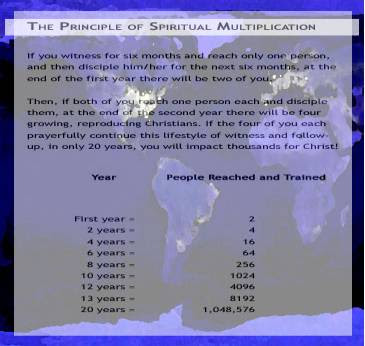
Healthy leaders are both patient AND consistent. The seed sower spread the gospel seed liberally. Some fell on the path, some on rocky soil, and some on good soil. It’s my experience that those who are patient and consistent in their disciplemaking leadership tend to see more fruit in multiplied leaders than those who lead by adopting the newest method. They pick up on the good soil quickly. They learn to spend quality time with those who are available and teachable. I learned this as I used Billie Hanks Jr.’s Operation Multiplication in disciplemaking. It’s dated, but it’s a good track to run on. The first set of books helps a new believer learn the basics and the second set helps them feed themselves and learn about evangelism and mission. They learn patience and consistency as they learn to trust you as a discipler. I make it my own as I go and I’ve seen more leaders encouraged to do the same simply because they now have a frame of reference for consistent disciplemaking.
Recently, our discipleship group (3 guys-now 4)) did a test run on the Small Circle discipleship material. This method blends a digital delivery with a systematic way for a new believer to gradually learn the basics of the faith while putting what they’ve learned into practice. As we went through the Small Circle material, I was reminded of patience and consistency. We met starting in July, got to know each other for a few months as we went through the material, and are now at a point of trust, addition of group members, and encouraging one another to take risks in areas we would like to grow. Patience and consistency. Saturday morning by Saturday morning. Weekly story by weekly story.
What if every leader poured into one other person for 12 months in such a way that expected the new leader to do the same? I think Luke 8:15 would apply and we would bear fruit with patience.























 Toby DeHay