Riding The Tiger: Servant Vs. Dictatorial Leadership


4 Minute Read: Photo by Enes Erdemli on Pexels.com

Al Mohler, President of The Southern Baptist Theological Seminary, often references a vivid phrase from political history: “Riding the tiger.” The idea is simple but sobering—when a leader gains power through control or fear, they may appear strong, but they’re actually in danger. They’re riding a wild beast that cannot be tamed. And once on, they can’t easily get off. The only way down is usually through death, disgrace, or destruction.

It’s an image often used to describe dictators, but it also serves as a powerful warning to Christian leaders.

Some pastors and ministry leaders, whether knowingly or not, begin to lead like they’re riding the tiger. They grip control tightly, build systems that depend on them, and silence or sideline others who could share the load. Instead of empowering leaders, they stifle them. Instead of helping people grow, they hurt them through fear, pride, or insecurity. Eventually, the very power they depend on turns on them—or worse, on the people they lead.

This isn’t just a leadership flaw—it’s a spiritual danger.

Jesus Didn’t Ride the Tiger

Jesus modeled something radically different. He said, “The Son of Man came not to be served but to serve” (Matt. 20:28). He washed feet. He raised others up. He handed off responsibility. Jesus led by laying down His life, not by clinging to control. He didn’t hoard power—He multiplied it through others.

If you’re leading in any capacity—pastor, elder, community group leader, disciple-maker—this is a gracious warning and a hopeful reminder: Don’t ride the tiger. Raise up others instead.

Here are three biblical principles that can help Christian leaders lead in a healthy, Christlike way:


1. Shepherd the Flock, Rather Than Control It

“Shepherd the flock of God that is among you, exercising oversight, not under compulsion, but willingly, as God would have you; not for shameful gain, but eagerly; not domineering over those in your charge, but being examples to the flock.”
—1 Peter 5:2–3

The church is not your platform. It’s not your empire. It’s God’s flock. Leaders are called to care, guide, protect, and nurture—not dominate. A shepherd feeds and leads. He doesn’t force or fear. The call is to serve with open hands and a humble heart.


2. Equip the Saints, Don’t Compete with Them

“And he gave the apostles, the prophets, the evangelists, the shepherds and teachers, to equip the saints for the work of ministry, for building up the body of Christ…”
—Ephesians 4:11–12

If ministry always centers around you, something’s off. Healthy leadership multiplies ministry. Your job isn’t to do all the work—it’s to train others to do the work. You may be the most gifted person in the room. Praise God for the way He gifted you. Now teach someone else what you know. Don’t ride the tiger of insecurity or ego. Equip the next generation.


3. Love, Don’t Lord Over

“You know that the rulers of the Gentiles lord it over them, and their great ones exercise authority over them. It shall not be so among you. But whoever would be great among you must be your servant…”
—Matthew 20:25–26

Jesus gave a crystal-clear warning: Don’t lead like the world. Worldly leadership is about power. Kingdom leadership is about service. You may get more applause as a domineering leader, but you won’t get more rewards. God honors leaders who love deeply and lead humbly.


The Contrast: Riding the Tiger vs. Walking Like Jesus

Riding the TigerWalking Like Jesus
Leads by fear and controlLeads by love and service
Fears being replacedRejoices in multiplying others
Holds tight to powerWillingly lays it down
Sees others as threatsSees others as partners
Ends in collapseEnds in legacy

Final Word

The truth is, when leaders ride the tiger, everyone gets mauled—leaders, followers, churches, families. But when leaders walk like Jesus, people flourish. Leaders grow. Churches thrive. The Gospel spreads.

So let me ask: Are you riding the tiger? If so, dismount while you still can—not by force, but through repentance, humility, and surrender. Lay down your need for control, and pick up the towel of a servant.

Jesus never called you to tame a beast. He called you to make disciples.

Lead like that.

Biking the Katy Trail: Day Five

We woke at the Marthasville, MO, community park club, packed our gear, and headed toward St. Charles. Day five included a 38-mile final stretch that went by quickly! We left Marthasville around 7:15 am and arrived in St. Charles by 11:15 am.

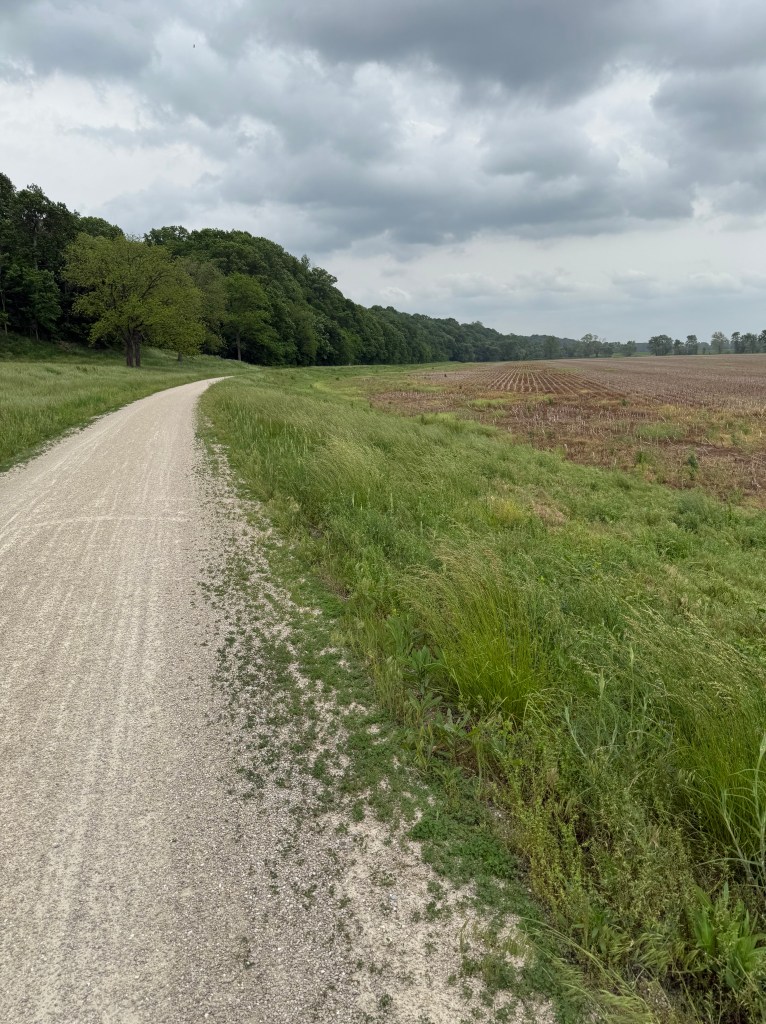
The scenery included more farmland, and as the trail grew closer to the city, it turned into woods, then suburban outskirts.

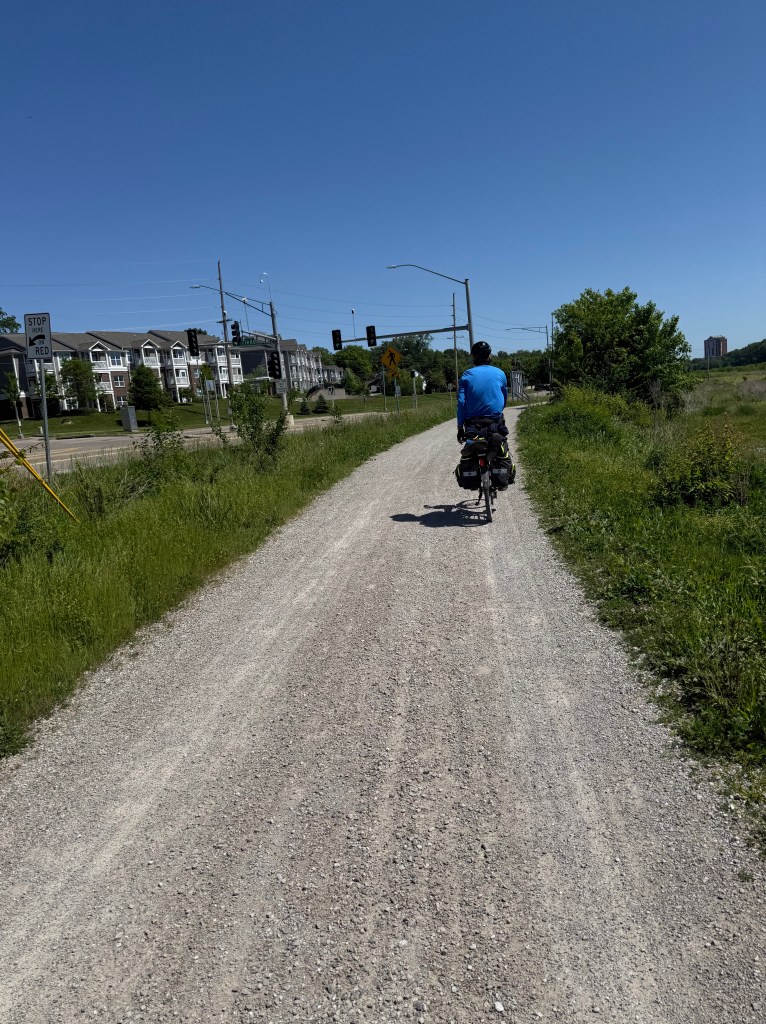
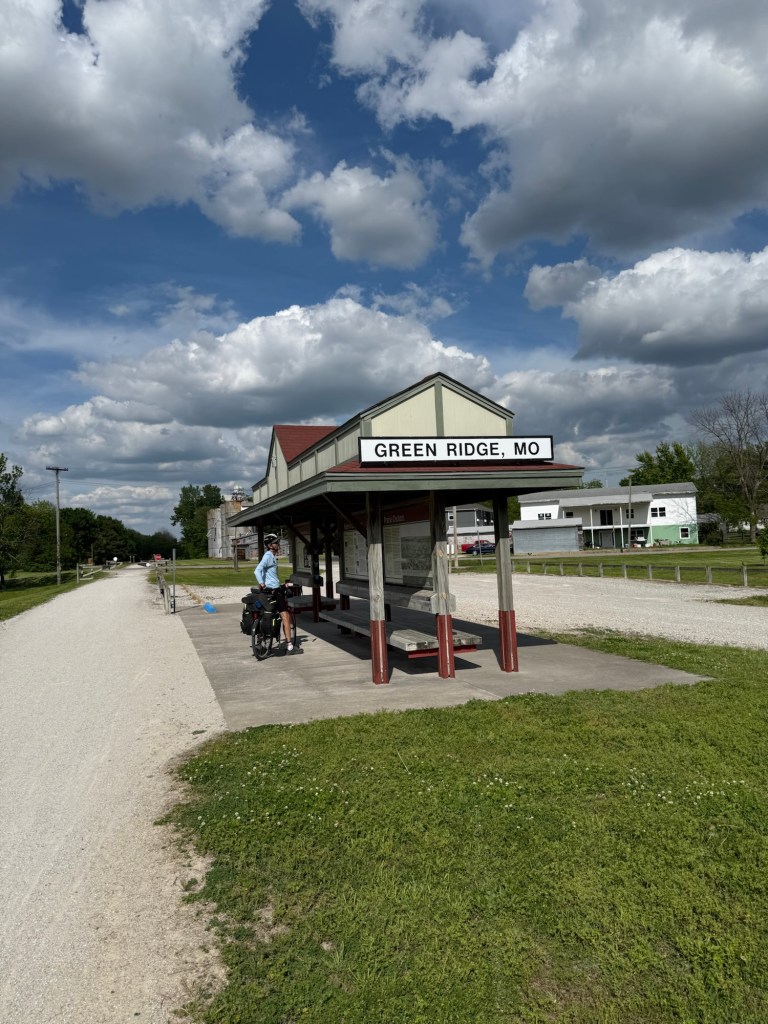
The limestone gravel was extremely packed on this side of the trail, and we were making excellent time! I’m guessing we averaged 13-14 mph. We stopped at a train station and chatted with some e-bikers a couple of times. The third time we saw them, they said, “You guys are going surprisingly fast to have all that gear!” We had the motivation to get to the end!!

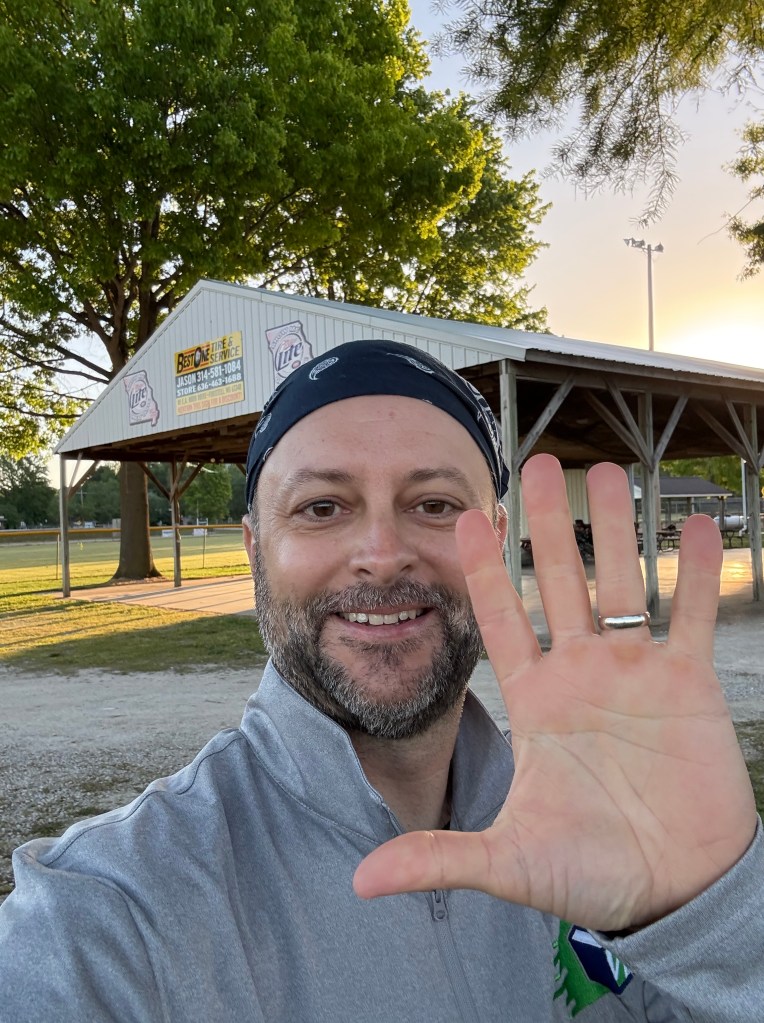
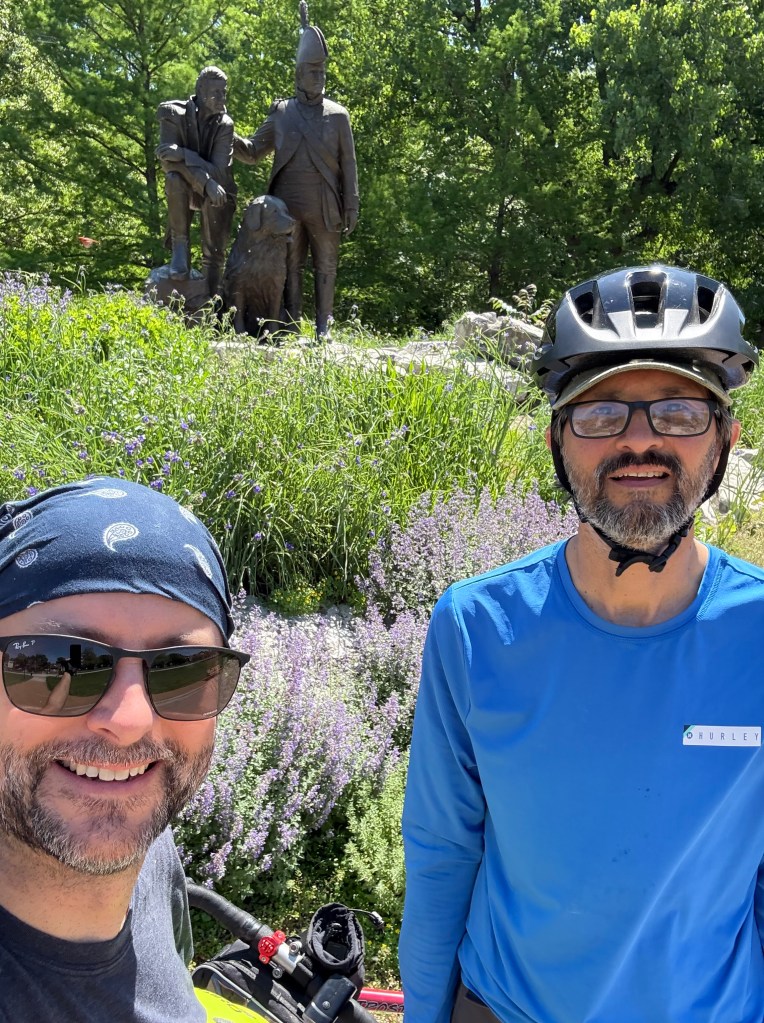
St. Charles at last! The Bike Stop Cafe is in the background. We began the trip with a shuttle from here!

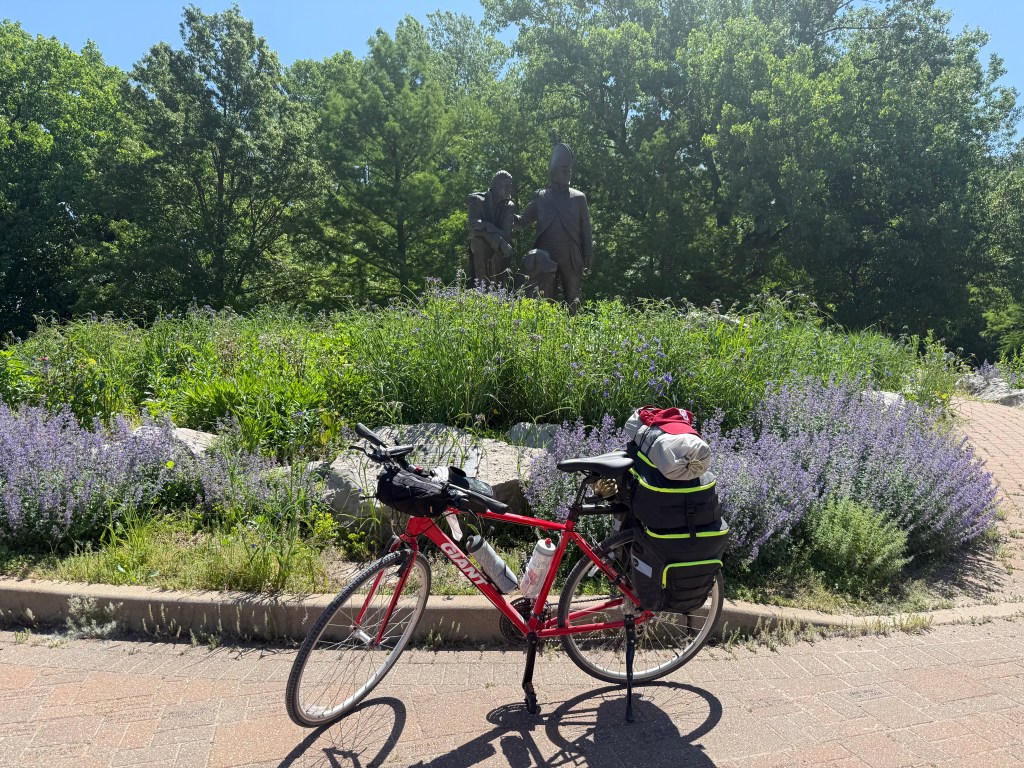
Statue of Lewis and Clark off the trail next to the Bike Stop Cafe.

We completed the MKT-Katy Trail, which was 237 miles (257 for us!). I’m posting each of these one week after the ride. My legs are just now feeling normal! This was a ride of a lifetime! After riding it with a regular bike, I think it would be fun to do so on an e-bike and stay the nights at hotels or Airbnb’s.

We had a fun time and met many great people on the trail. If you ever have the desire to do anything like this, make a plan and get started. We lived in Kansas City, MO, for almost 10 years. Each time we drove under the MKT bridge on I-70, I would tell Christy, “One day I’m going to ride that whole trail!” As Eddie and I rode over I-70 on that bridge, I remember thinking, “I’m doing it! Enjoy the moment!!” Over 15 years later, I finally did it!

Psalm 118:24 (ESV)

“This is the day that the Lord has made; let us rejoice and be glad in it.”

Biking the Katy Trail: Day Four

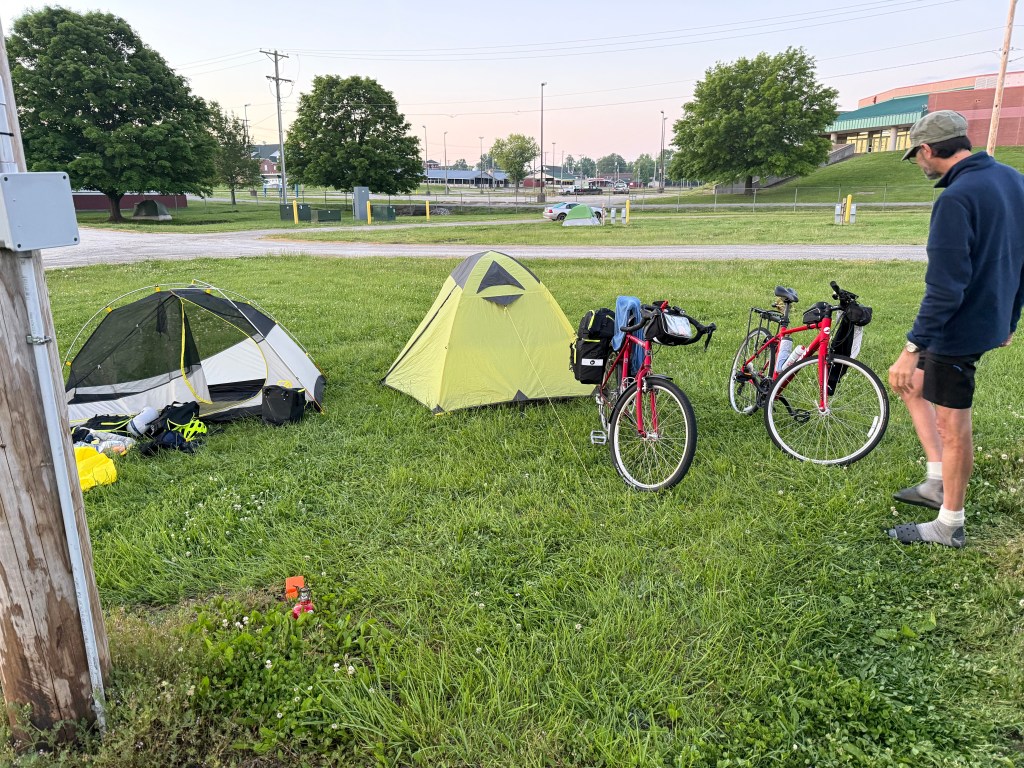
We began day four in Portland and ended up in Marthasville. Neither of us slept very much the previous night. We had some noisy camping neighbors and several cars driving on the gravel slowly near the campground. Neither of us could understand the traffic. There is nothing in Portland! (Eddie’s YouTube video for days four and five)

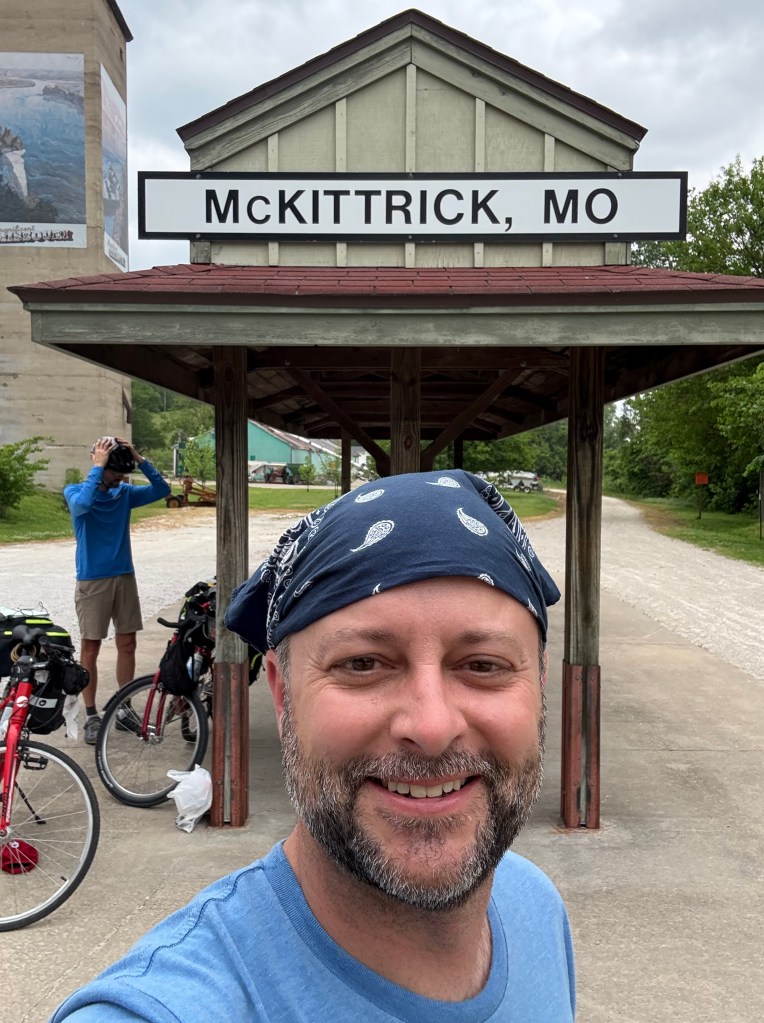
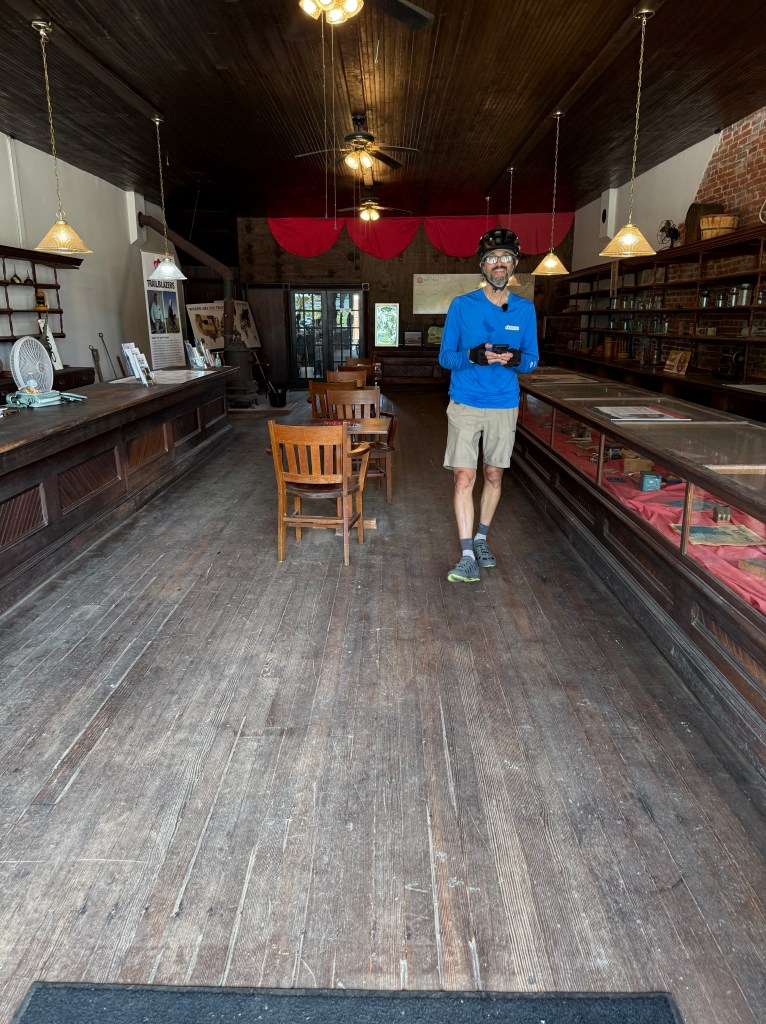
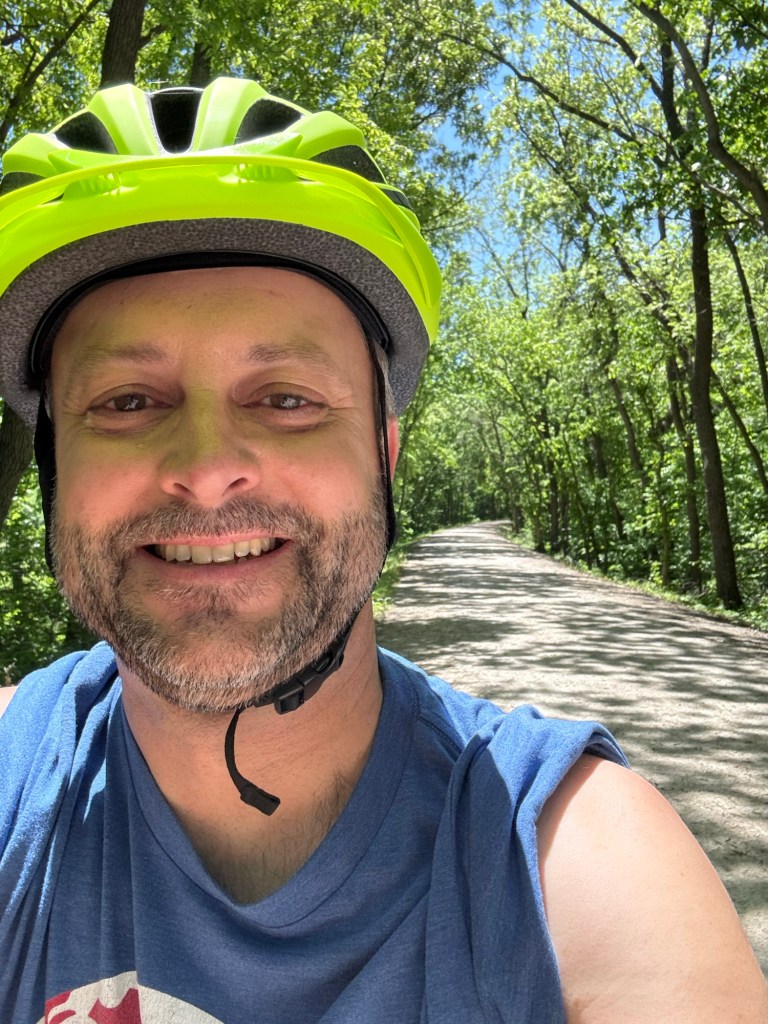
On day four, I began to worry about the top of my head burning, so I turned into “Prison Toby.” We stopped at McKittrick and enjoyed some time catching up with our friend Ova at the 1896-built mercantile. Much of the day’s scenery included open farmland, woods, and a view of the river.

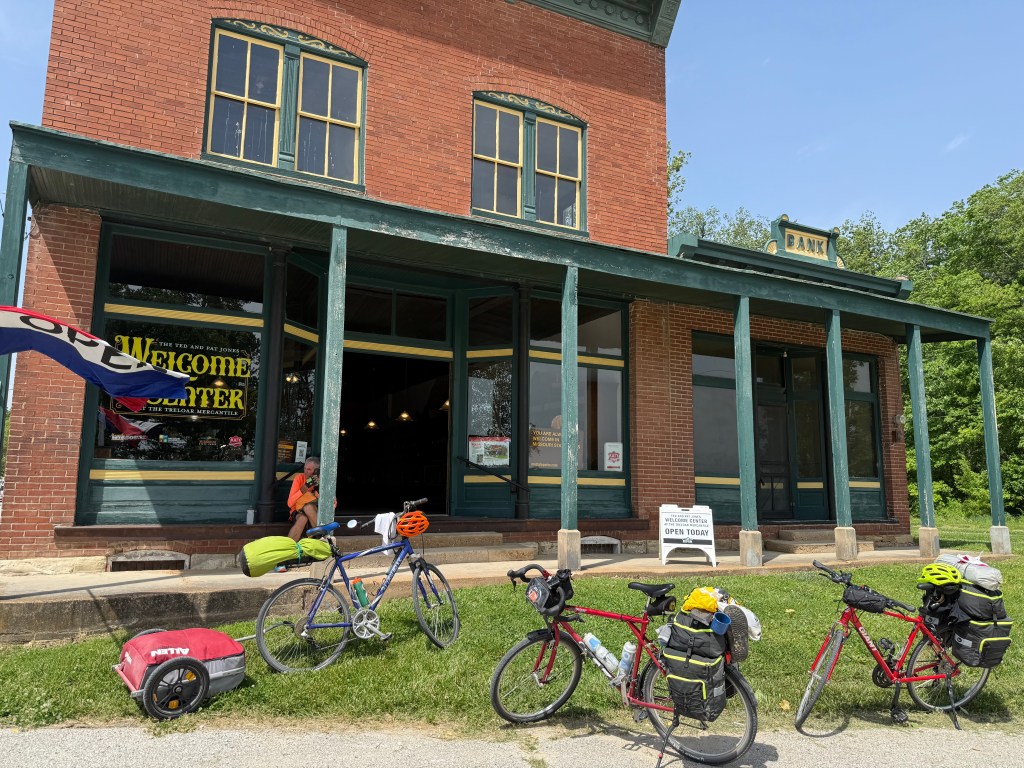
Ova towed a bike trailer. He hated it! If you plan on biking the Katy, do not get a bike trailer. Ova said he could pack too much gear, which added too much resistance. In loose gravel, the small tires slowed him down to the smallest gears, making the ride extremely difficult.

This section of the trail has little to no water. One biker said he went 40 miles with no water. McKittrick has water from a frost-free hydrant in a grassy area to the left of this building. All the fixtures and flooring seen in the picture above are original to the 1896 store.

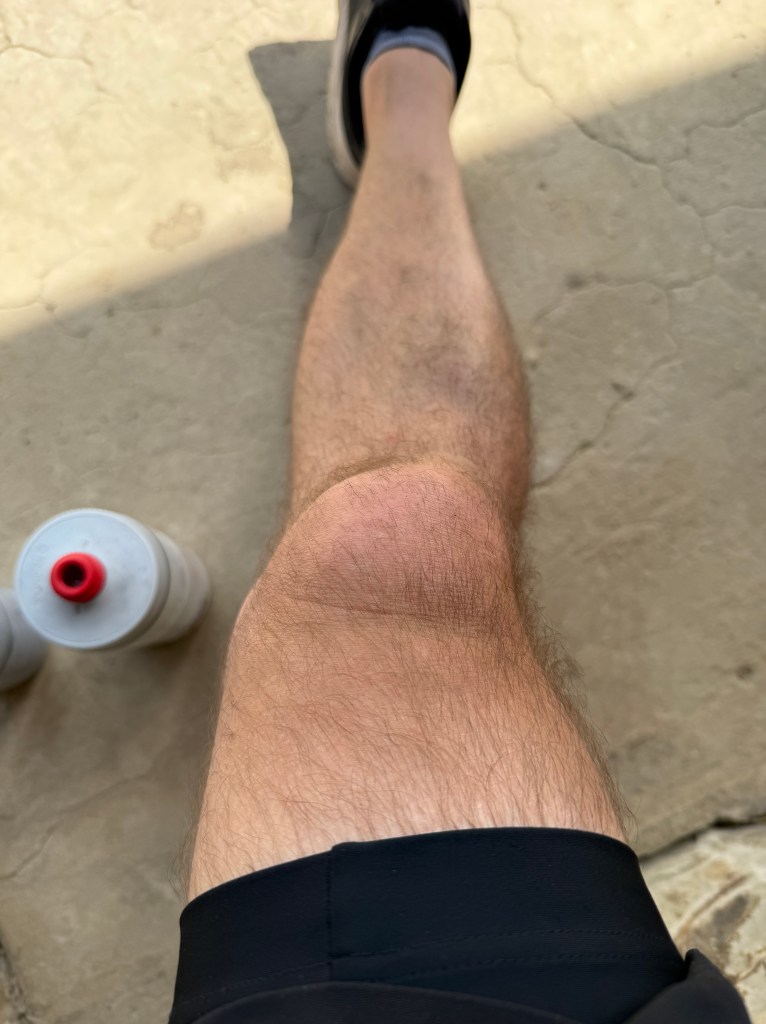
At the McKittrick stop, I noticed my knees were swollen. They didn’t hurt, but they were enormous!

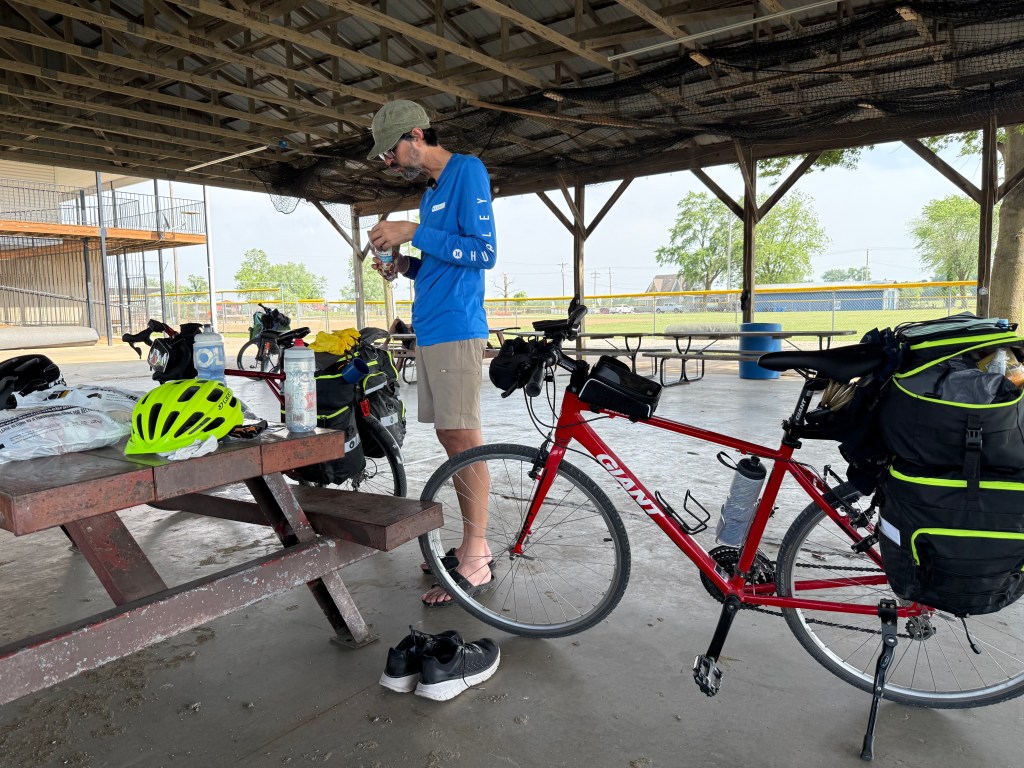
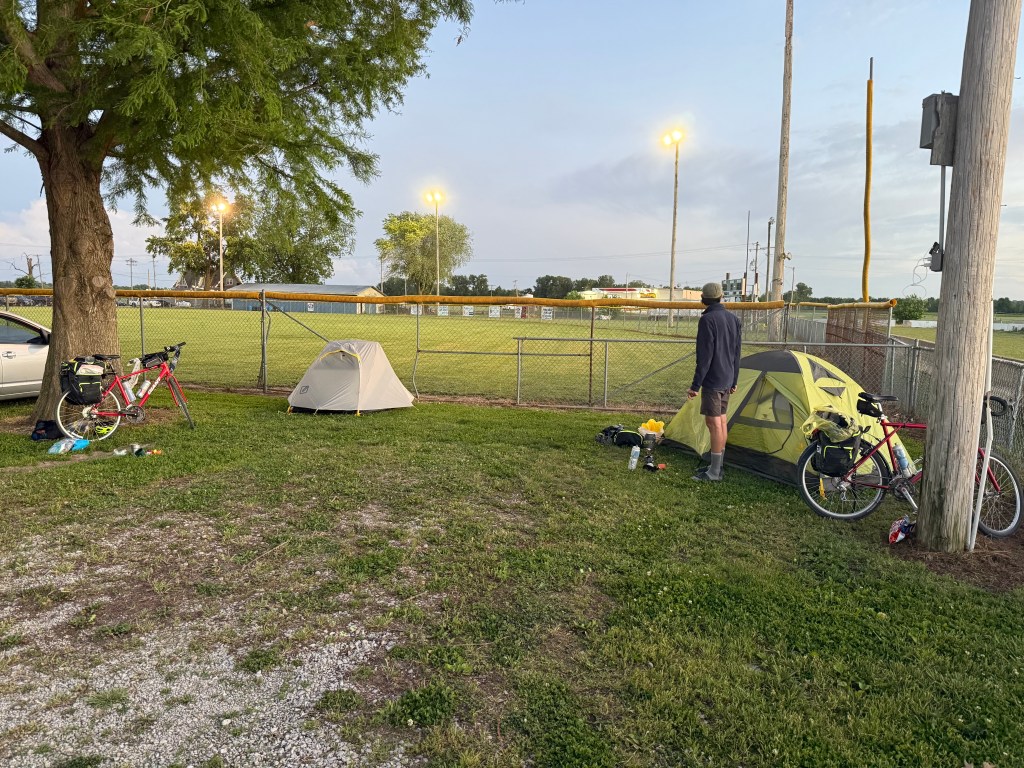
We arrived in Marthasville at around 3 pm and camped at the Little League field for $5 each. There were 6-8 other bikers camping, and at 6:15 pm, local cars full of kids began parking all around our tents as games were about to begin. Eddie and I chose the grass near the outfield, and I enjoyed some Cracker Jack while watching the little guys play. We had a meal with a 54-year-old retired veterinarian named Kurt at a restaurant to the left of the blue building in the picture above. Kurt had a belt-driven bike and enjoyed a solo ride on his new retirement.

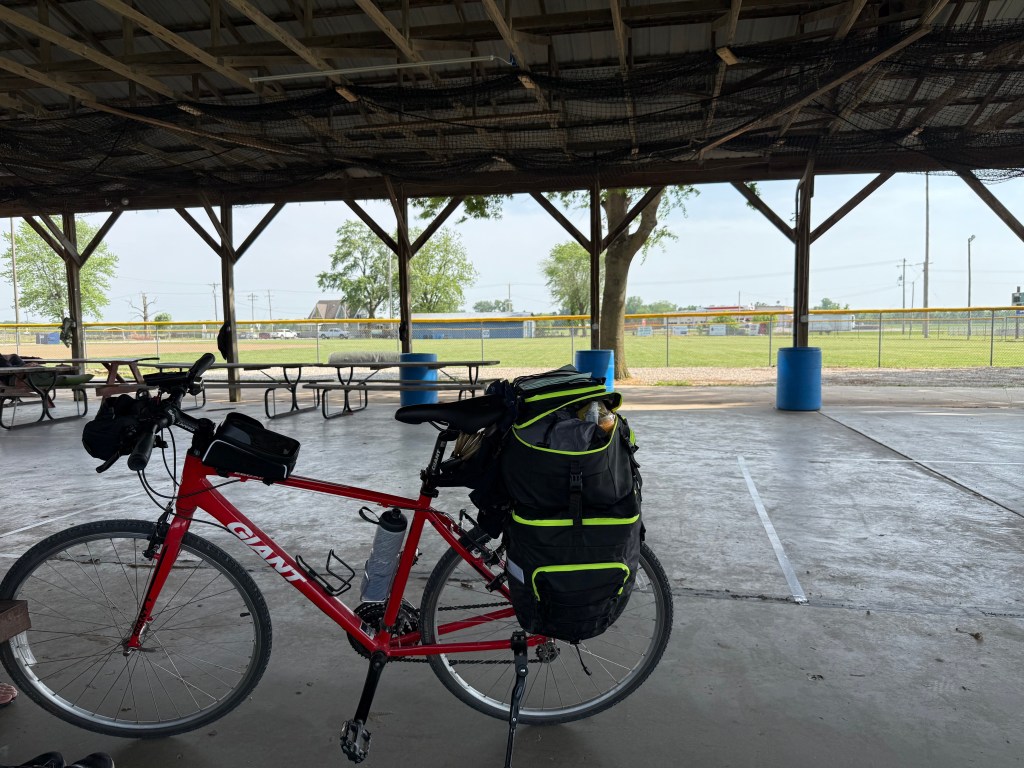
On day four, we biked around 40 miles. It was the earliest we’d stopped for the day and the most interesting campsite! I used the shower, and the ball complex had a nice covered pavilion, snack bar, and water available. Lea is the contact for this campsite, and her info is found here. She has some crazy stories of going to pick up drunk bikers who thought they could ride to a nearby winery, only to discover they were too drunk to bike or find their way back to town!

When Boundaries Become Unbiblical

4-minute read time. Photo by Luke Barky on Pexels.com

Boundaries, at their best, are a biblical tool for managing our hearts, relationships, and responsibilities. They help define where we end and others begin. As Henry Cloud writes in his book Boundaries, “Boundaries define us. They define what is me and what is not me.”

Scripture affirms the value of wise limits:

  • Proverbs 4:23 – “Keep your heart with all vigilance, for from it flow the springs of life.”
  • Galatians 6:5 – “For each will have to bear his own load.”

These verses highlight personal responsibility and self-governance under Christ’s Lordship. Boundaries are not only wise—they’re necessary. But what happens when they become the very thing that keeps us from the life Jesus calls us to live? What happens when boundaries become unbiblical?


What Are Some Ways Boundaries Help Us Be Faithful—As Well As Help Us Hide?

Healthy boundaries can protect our calling. They help us say “no” to lesser things so we can say “yes” to God’s best. They preserve time for rest, worship, and obedience. For example:

  • Declining toxic relationships that consistently pull us away from the Lord.
  • Setting aside Sabbath time for rest and communion with God.
  • Saying “no” to overcommitment so we can stay available for what really matters.

However, boundaries can also become a spiritual disguise for avoidance. Instead of creating space to love and serve well, they can become shields that hide fear, pride, or laziness.

Examples:

  • Avoiding community because “you need margin,” when in reality, it’s self-protection.
  • Ignoring a need because it inconveniences your routine.
  • Using boundaries to reject people or responsibilities that require real sacrifice.

Jesus didn’t live boundary-less, but He didn’t live self-protectively either. He withdrew to pray, but He also had compassion on the crowds (Mark 6:34). Our boundaries should reflect that same Spirit-led rhythm.


My Life Revolves Around My Boundaries Rather Than Them Helping Me Behave

Boundaries are meant to serve us, not rule us. When our lives revolve around our boundaries, we may no longer be stewarding them—they may be controlling us.

Paul warns against this subtle slavery:

  • Galatians 5:1 – “For freedom Christ has set us free; stand firm therefore, and do not submit again to a yoke of slavery.” (Freedom in Christ keeps us from legalism of all sorts.)
  • Romans 12:1 – “Present your bodies as a living sacrifice, holy and acceptable to God, which is your spiritual worship.”

Boundaries should support a surrendered life, not obstruct it. When we treat them as untouchable, we might resist the Spirit’s invitation to flexibility, faith, or sacrifice.


Boundaries Can Become Idol Worship

Idolatry occurs whenever something other than God becomes the functional center of our lives. Even good things—like boundaries—can become ultimate.

  • Exodus 20:3 – “You shall have no other gods before me.”
  • 1 John 5:21 – “Little children, keep yourselves from idols.”

Do you find your peace more in your routines than in your Redeemer? Do you cling to your personal rules more than God’s call to love?

If your identity is built on having a “balanced life” instead of obedience and surrendering to Christ, you may worship control, not the Lord.


Boundaries Limit Healthy Discipleship and Engagement with Others

Discipleship is inconvenient. It’s messy, relational, sacrificial, and rarely fits neatly into a calendar block.

  • 1 Thessalonians 2:8 – “We were ready to share with you not only the gospel of God but also our own selves, because you had become very dear to us.”
  • Matthew 28:19–20 – “Go therefore and make disciples of all nations…”

Jesus’s mission demands our availability, not just our structure. Healthy boundaries should create margin so that we can be more, not less, interruptible.

When we hide behind boundaries, we stop offering our lives to others. We opt out of costly love. We choose safety over obedience.


A Biblical Vision of Healthy, Christ-Centered Boundaries

Jesus modeled rhythms of rest and engagement. He withdrew often to pray (Luke 5:16), but He didn’t withhold Himself when people needed compassion or truth.

A Christ-centered boundary says:

  • “I want to be faithful with my time so I can serve you well.”
  • “I’ll guard my energy not to protect myself, but to give more freely.”

Principles for biblical boundaries:

  • They exist to say “yes” to God more clearly, not merely to say “no” to others.
  • They are flexible to the Spirit’s leading.
  • They are held in humility, not control.

Conclusion

Boundaries are wise and biblical, but they must remain surrendered to Christ. When they become excuses, idols, or walls, we risk cutting ourselves off from the very life Jesus invites us into.

So we must ask: Are our boundaries serving God’s mission—or our comfort? Are they helping us live faithfully—or hide fearfully?

May we live with open hands, healthy rhythms, and hearts fully available to the purposes of Christ.

Biking the Katy Trail: Day Three

We began day three at Cooper’s Landing and enjoyed a coffee and some oatmeal while cleaning our bikes. At this point on the trail, the path regularly followed the Missouri River. My metabolism is typically a bit high, but I was eating constantly on this trip! After starting each day with oatmeal, I ate snacks of nuts, packaged tuna/salmon, spam, dried fruit, and an occasional gel packet. We stopped in Jefferson City on Wednesday for lunch at a downtown BBQ. (Eddie’s YouTube video for day three)

The trails were very clear the week we were there. This was the only obstruction the entire week!

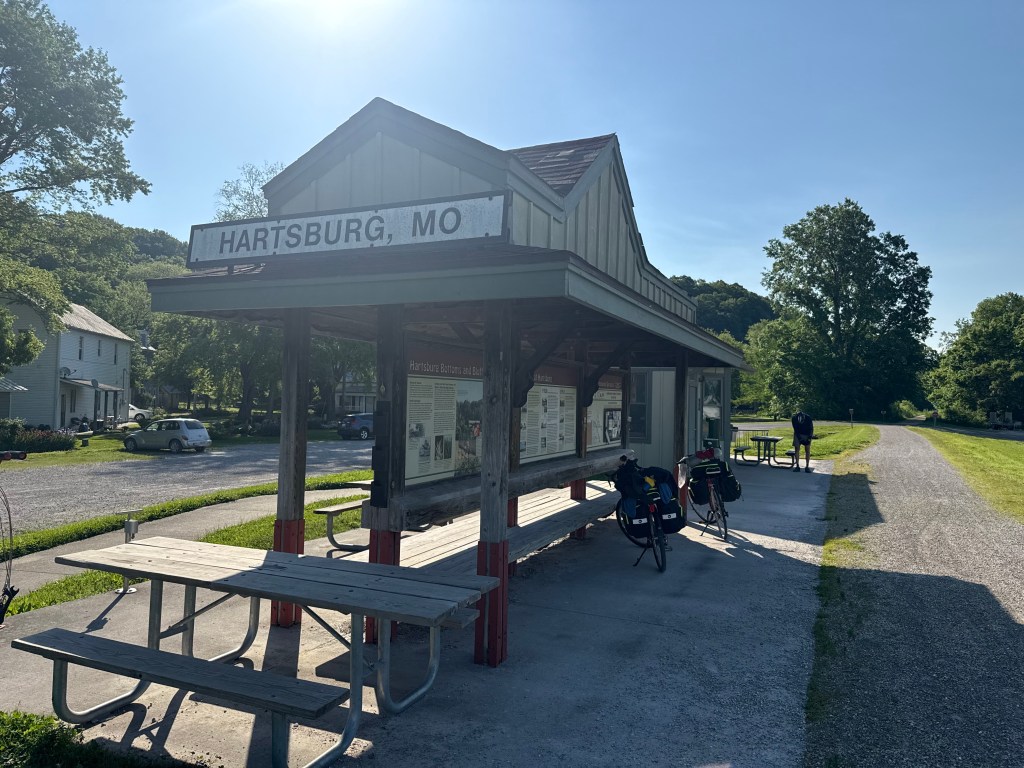
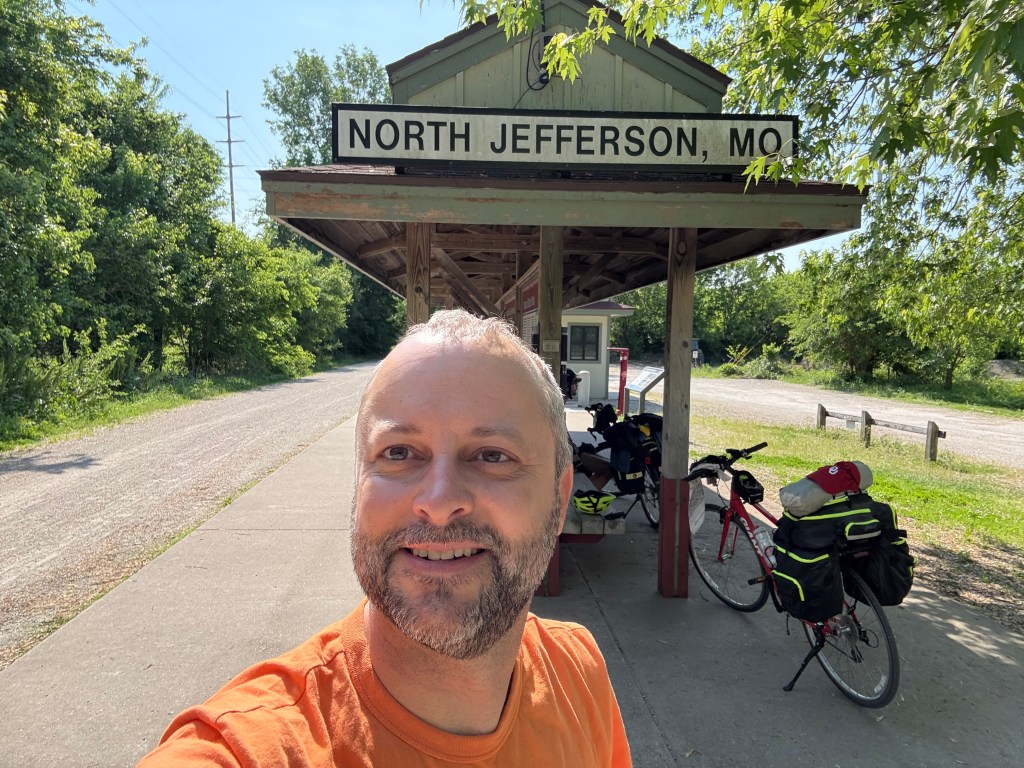
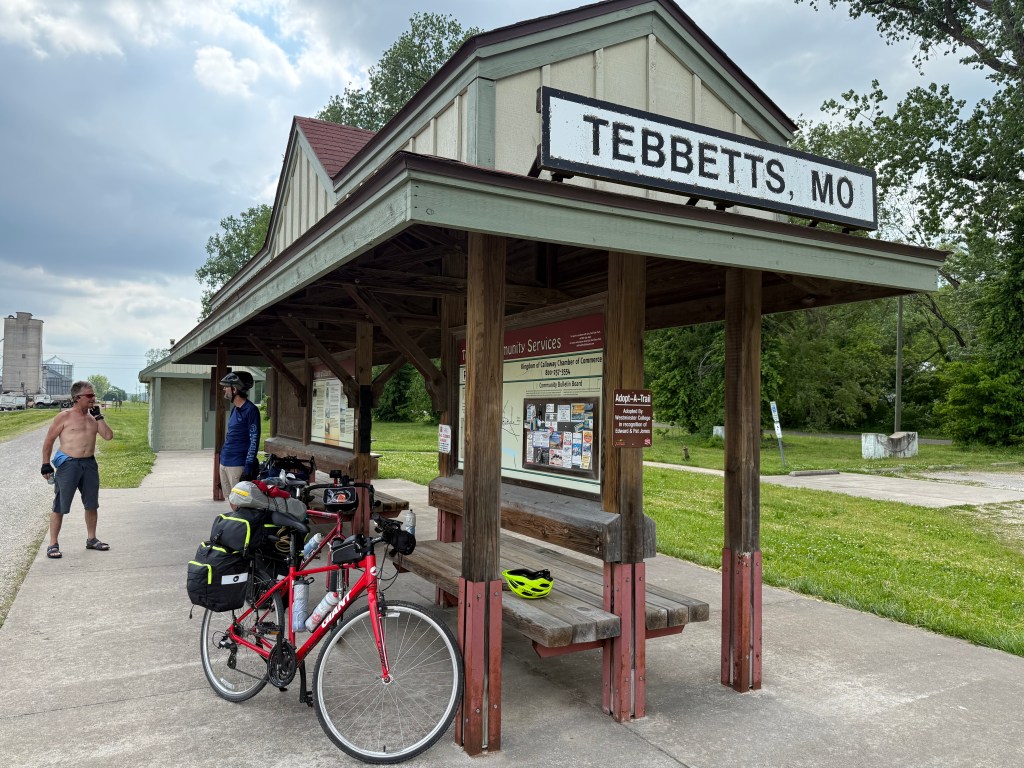
We kept the practice of stopping at each one of these train stations. They typically had a restroom and a water refill station.

I made a huge mistake at the Jeff City train station. We wanted to go into the city to get supplies and eat, but I didn’t want to leave my GPS on to tell me where to turn. I was trying to conserve the battery. We passed the spur we needed, began chatting, and ended up 5 miles down the trail! We had to bike back the 5 miles on the hottest day! Eddie found his cappuccino in Jeff City and told the lady, “I think I’ll take a latte.” I said, “Nope! I’ve been listening to you talk non-stop about a cappuccino, you’re getting a cappuccino!!” Haha!

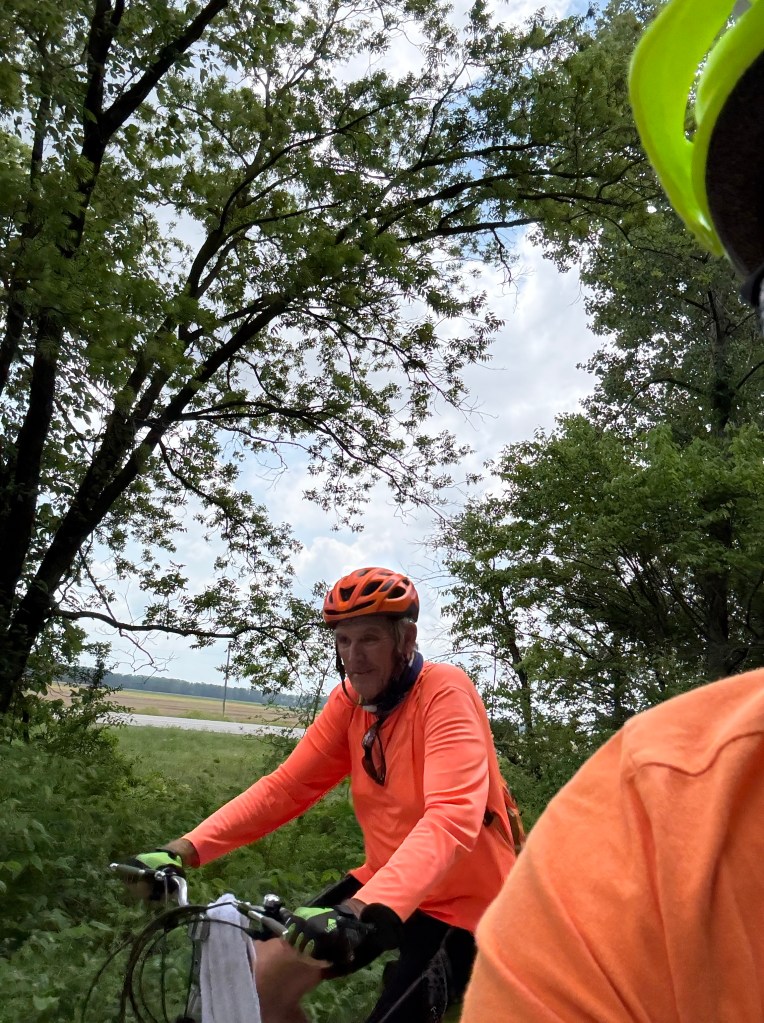
Along the way we met some really fun people. The older man in the orange is from Florida and spent most of his life in Eastern Kentucky. He biked the MKT, planned to take 3 days off, and was headed out west to bike a week with his daughter. The shirtless gent biked with Busch Light’s strapped to his bike and we quickly learned his catch phrase: “See you at the next bar!”

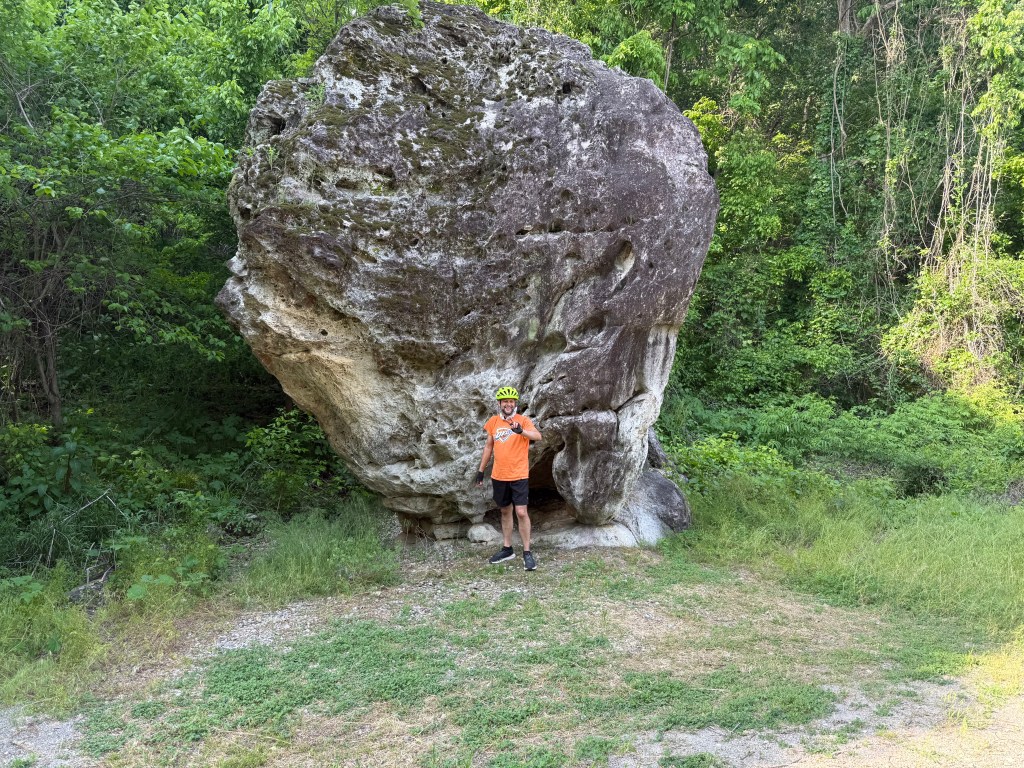
We stopped at Standing Rock and read a little about the history of the Lewis and Clark tour. My favorite book on Lewis and Clark is Undaunted Courage! Just above my head is the flood line from 1904, I think.

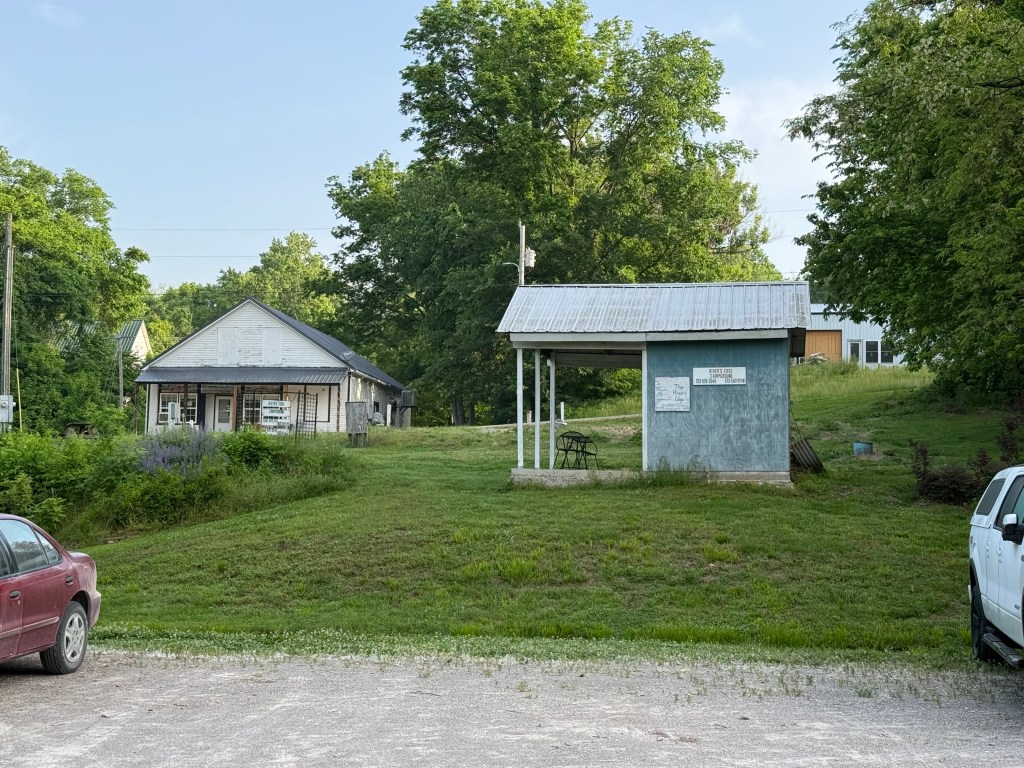
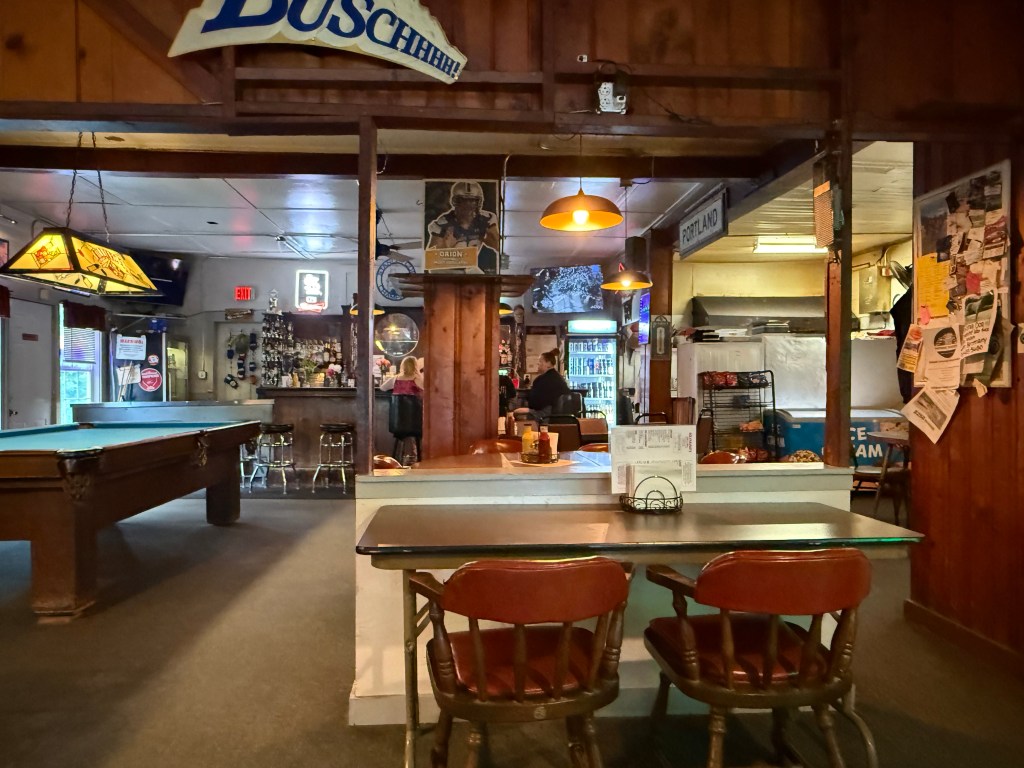
On day three, we stayed at the River Edge Campground (4 tent sites and a few RV hook-ups) for $15. We ate at the bar and grill (the town’s only restaurant) and learned that it was an eatery and the town’s community center!

We biked 47 miles plus 10 round-trip mistake miles and several more to get to and from Jefferson City.

Biking the Katy Trail: Day Two

On day two, we began in Sedalia and camped at the Missouri State Fairgrounds camping area. The fairgrounds are about a half a mile off the trail, and you simply set up and wait for the kindly gentleman to come by and collect your payment. We paid $15 each for camping, had a hot shower in the bathhouse, and found some electricity to charge our devices. The previous day, we biked 37 miles and finished the day with a nice meal at El Tapacio Mexican restaurant in Sedalia. (Eddie’s YouTube video: Day Two)

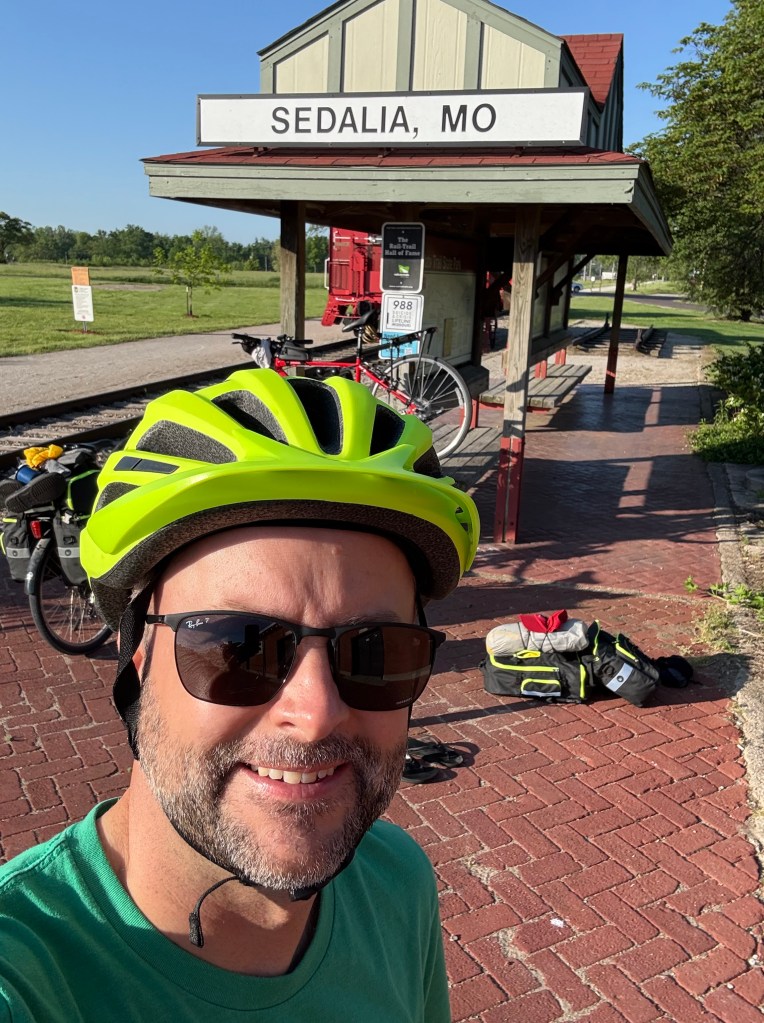
We noticed the front wheel on my bike was continually becoming loose, so Eddie looked at it at the Sedalia train station.

The ride from Sedalia to Boonville was one of the most challenging rides. Much of the trail was uphill, and we took several breaks to continually work on my bike. When we arrived in Boonville, we ate hibachi at a food truck in town, took a nap, and began to find our way back to the trailhead.

When we arrived at the trailhead, we heard someone whistling at us and noticed our new friends from the shuttle in Clinton. They had saved a banana for Eddie (he’d been talking the day before about looking for bananas and a cappuccino on the trip!). While we were talking, one of the guys told us we needed to check out the historical pieces inside the Boonville Trail Museum. While in there, we were able to find the tools we needed to fix my bike properly!!

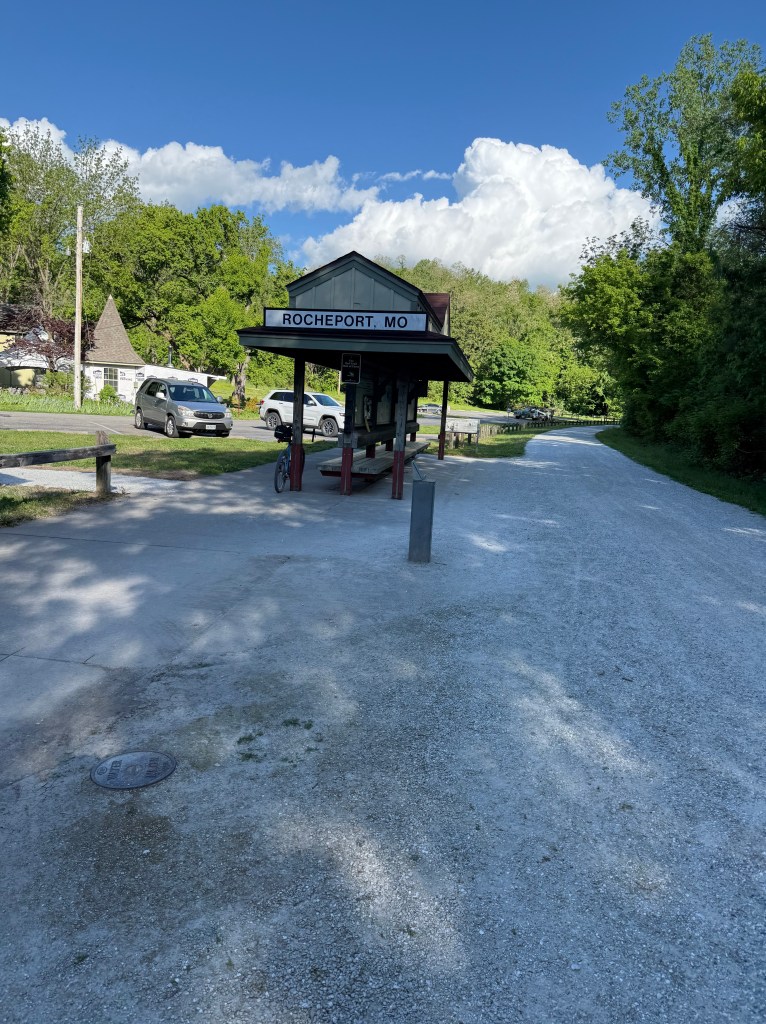
We arrived in Rocheport at around 4 pm, and we were exhausted! There were no camping sites, so we decided to rest awhile and keep biking toward Easley and Cooper’s Landing Campsite. The remainder of the day’s ride was downhill (15 miles). Our biking friend, Ova, also arrived and was so tired that he slept at the train station in the picture above.

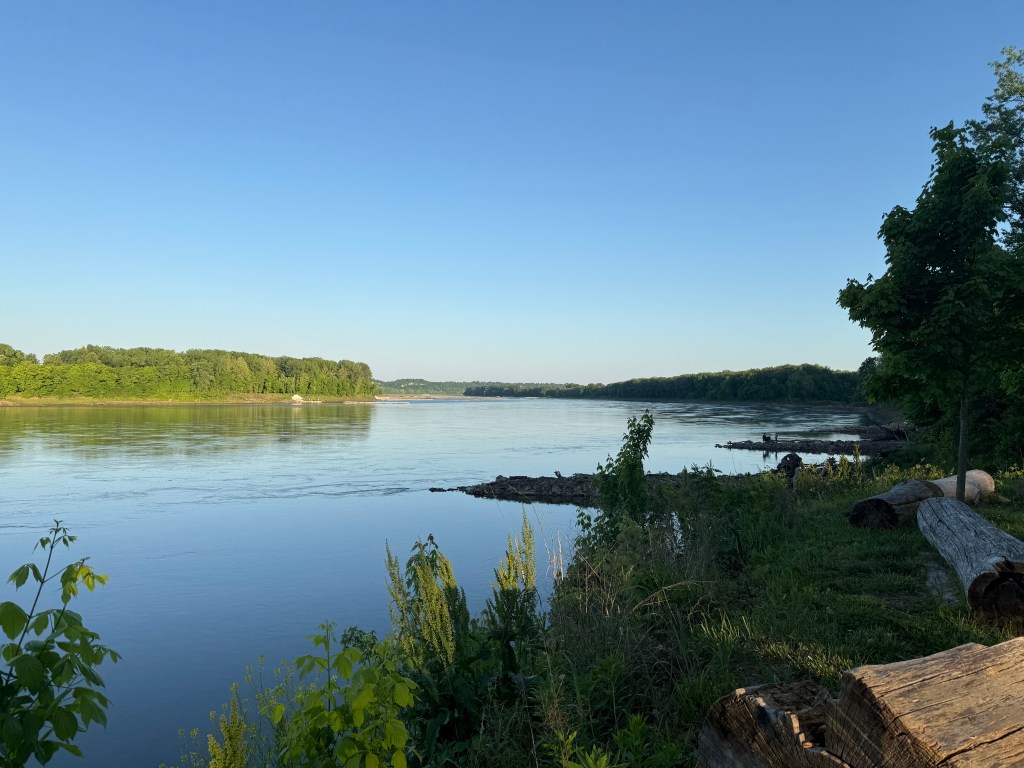
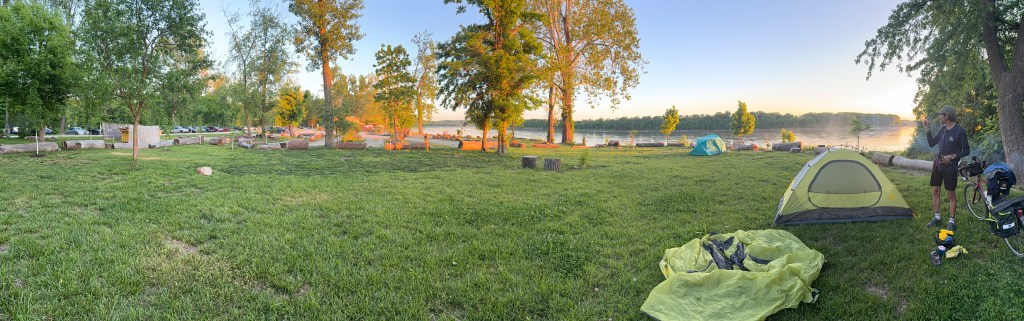
At Cooper’s Landing, we took a cold hose shower and enjoyed an amazing view of the Missouri River! On day two, we biked 65 miles.

Biking the Katy Trail: Day One

My friend Eddie and I arrived in St Charles MO on Sunday evening and on Monday early we met at the bike stop café in Saint Charles and rode with 11 other riders to the western end of the trail: Clinton, Missouri. Since we met in Saint Charles at 8 AM, we weren’t able to start riding until about 1 PM after we arrived in Clinton at the beginning. 

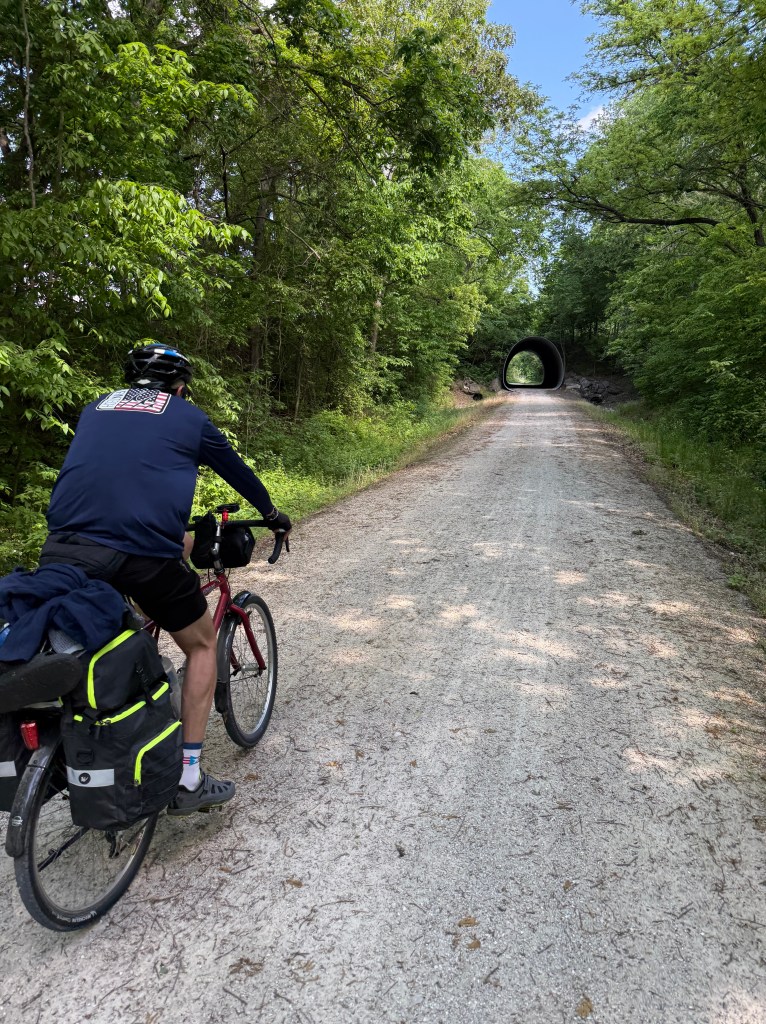
The trail is very well maintained and a nice ride. We passed the high point today and stopped for a break. (Here is Eddie’s YouTube video for Day One.)

Almost every time we stopped, we spent time with the crew from the shuttle. There were six older guys who ride all over the country each year. They are fun!

At the high point pavilion, a gentleman was super kind to take our picture as long as we didn’t mind if he rolled a Doobie and smoked it! Mr. Doobie had completed the west to east portion and was on his way to finishing the east to West ride. He was then planning on taking the Rock Island spur and riding it to Kansas City for his flight home. We also met two older ladies there who told us about them biking across the entire United States; and one of them twice!

We are really enjoying meeting new people. One lady was there supporting a group of bikers and offered us bananas! So kind! 

So far much of the trail is shaded and provides a really nice view of farmland on either side. Occasionally, we come across small rural towns that do not have very many amenities.

Eddie and I intended on riding further today but got way too tired and stopped in Sedalia Missouri. The Missouri State fair grounds have a campsite and camping is $15 per tent in the primitive sites. 

After day one, our bodies are sore, we are a bit dehydrated, but we are clean, well-fed, and ready for a nights rest so we can begin day two!

Day one total: 37 miles

McDonald’s and Disciple Making: A Simple, Effective Strategy for Meeting

3-minute read

For many of us, McDonald’s is just a fast-food restaurant, but it can also be a strategic meeting place for disciple-makers. I’ve found that gathering at McDonald’s for coffee provides a consistent, low-cost, and accessible setting for disciple-making. Here’s why—and how you can leverage this approach in your disciple-making efforts. (Apologies to my new friend Joel. He owns a coffee shop in a town northeast of me. His place is now my go-to when I’m in his town!)

1. McDonald’s are Everywhere

One of the biggest advantages of using McDonald’s as a meeting place is its sheer availability. No matter where you are, you’re likely to find one nearby. This makes it easy to set a predictable location for meeting with those you are discipling, whether at home or while traveling.

2. Affordable and Low-Pressure Environment

A cup of coffee at McDonald’s is inexpensive, making it an accessible option for anyone. I use their app, and some of the time, I can get any sized cup for $0.99!! Unlike higher-end coffee shops, where the cost might be a barrier, McDonald’s allows you to meet without financial strain. It also provides a casual setting where people don’t feel pressured to buy more than they can afford.

3. Consistency Builds Relationships

Meeting at the same McDonald’s on the same days creates an opportunity to get to know the employees and regular customers. Over time, you learn their names, hear their stories, and have natural opportunities to pray for them or share the gospel. Your presence becomes a witness in the community. At the Mc’y D’s by my house, the manager always comes to find me, asks about the missing guy, and receives prayer and encouragement gladly! If my coffee order takes too long, they are making a fresh pot for me! So kind!! Ba da ba ba baaaa!!

4. A Neutral, Public Setting

Some people may be hesitant to meet in a home or a church setting, but a public place like McDonald’s removes that barrier. It’s a relaxed environment where conversations can happen naturally without feeling overly formal. I don’t have to worry if my home is presentable or if the person is too far from the church building.

A friend recently met with a young believer at McDonalds because the young man had his kids with him. The kids played in the Playplace while my friend encouraged him over coffee or soda.

5. Predictability Encourages Commitment

When meetings happen in the same place at the same time, it’s easier for both the disciple-maker and the disciple to stay committed. Consistency helps develop habits, and a regular rhythm of meetings makes discipleship more sustainable.

6. Opportunities for Spontaneous Gospel Conversations

Public places invite organic interactions. Someone may overhear your conversation, ask what you’re studying, or join in. Employees and other customers might ask about your Bible or devotional book, providing an easy opportunity to share the gospel. A few months ago, a man was watching us pray. He came over and asked if we were a people of prayer. When we said “Yes,” he asked if he could join us for a minute. Another time, the manager asked what we were doing. We were able to share about the book we were reading together as well as the gospel!

7. A Model Others Can Easily Follow

Using McDonald’s as a meeting place removes barriers to disciple-making. Anyone can grab coffee and open the Bible with someone else. This model is easy to replicate, encouraging others to do the same.

McDonald’s may not be a traditional setting for discipleship, but it’s a practical and effective one. By intentionally using everyday places like this, we create simple, repeatable patterns that allow discipleship to flourish in our daily lives. So, next time you grab a coffee at McDonald’s, consider how it might become more than just a caffeine stop—it could be the starting point for lifelong spiritual growth.

If you don’t care for McDonalds or are in a different culture/context, what principles can you gain to achieve the goal of regularly meeting in a “third place?”

You Don’t Have to Grow Alone: Finding a Discipler

5 Min Read Time. Photo by Pixabay on Pexels.com

Discipleship is at the heart of the Christian life, modeled by Jesus Himself in His relationships with His followers. Finding someone to disciple you can be a crucial step if you desire to grow spiritually and deepen your faith. This guide explores how to seek out and approach a mature believer who can help you in your walk with Christ.

1. The Importance of Discipleship

Jesus commanded His followers to “make disciples of all nations” (Matthew 28:19–20). Discipleship is not optional for Christians—it is a biblical mandate. Jesus Himself said, “If you love me, you will keep my commandments” (John 14:15), reminding us that obedient followers take His words seriously. Being discipled by a mature believer helps you grow in faith, gain a clearer understanding of Scripture, and develop the character of Christ. Proverbs 27:17 says, “Iron sharpens iron, and one man sharpens another.” The Christian life is meant to be lived in community, with believers helping one another mature in faith.

2. What to Look for in a Discipler

Not everyone is suited to be a discipler-yet! When seeking someone to disciple or mentor you, prioritize spiritual maturity and biblical faithfulness over charisma or status. Key qualities to look for include:

  • Biblical Faithfulness – A discipler should be grounded in Scripture, rightly handling the Word of God (2 Timothy 2:15), and living in obedience to it.
  • Christlike Character – Look for someone who exhibits the fruit of the Spirit (Galatians 5:22-23) and lives with humility, integrity, and love.
  • Prayerful Dependence on God – A strong discipler relies on God through prayer and encourages those they disciple to do the same.
  • Commitment to the Local Church – Since discipleship is a communal effort, the ideal discipler should be actively engaged in their local church.
  • Encouragement and Generosity – Inspired by Barnabas, a good discipler uplifts, supports and generously invests in others (Acts 4:36-37).
  • Reliability and Consistency—A discipler should be dependable, showing up when they commit and demonstrating a long-term investment in their mentee. They should also model consistency and be the ones to calendar the upcoming appointments.

3. Where to Find a Discipler

The best place to find a discipler is within your local church, where spiritual relationships are naturally formed. Here are a few places to look:

  • Pastors and Elders – Church leaders are often experienced in discipleship and can either disciple you personally or connect you with someone.
  • Community Group/Sunday School LeadersIf you’re in a small group, consider approaching a leader or mature member who is already walking in discipleship.
  • Ministry Leaders – Those serving in teaching, prayer, or outreach ministries often have a heart for discipleship.
  • Faithful Older Believers – Seek those who have demonstrated endurance and faithfulness over the years.
  • Discipleship Networks and Online Communities—Some churches and organizations offer online discipleship programs, which can be a good supplement if in-person options are limited.

If you’re struggling to find someone, ask a pastor or church leader for guidance—they may connect you with someone willing to invest in your spiritual growth.

4. How to Approach a Potential Discipler

Once you’ve identified someone who fits these qualities, be intentional and humble in your approach. Here’s how:

  • Pray for Guidance – Ask God to lead you to the right person and prepare your heart for discipleship.
  • Be Clear and Direct – Express your desire to grow spiritually and ask if they’d be willing to meet with you regularly. You might say:

    “I admire your walk with Christ and have been praying about growing in my faith. Would you be willing to meet regularly to help me grow as a disciple?”
  • Start Small – Instead of asking for a long-term commitment upfront, suggest meeting for a few months to see if it’s a good fit.
  • Respect Their Time – Many mature believers have busy schedules, so be flexible with meeting times. Do your best to arrive a little early and finish at the time you’ve agreed upon. Ask them what days and times are best for their schedules.
  • Be Teachable and Consistent. Show your commitment by being prepared for meetings, applying what you learn, and following through on any recommendations they make.
  • Be Patient – Don’t be discouraged if someone declines due to time constraints. Keep praying and seeking the right discipler.

5. Discipleship is Relational and Reciprocal

Discipleship is not just about receiving instruction but building a relationship. Both the discipler and the disciple grow together. As you engage in discipleship, be willing to share your struggles, victories, and spiritual insights. True discipleship involves mutual encouragement and accountability (Hebrews 10:24-25).

6. Commitment and Practical Steps

For discipleship to be effective, it requires intentionality. Consider these practical steps:

  • Set a Regular Meeting Time – Whether weekly or biweekly, having a set time ensures consistency.
  • Study Scripture Together – Focus on biblical truths that will help you grow spiritually.
  • Pray Together – Prayer should be a core part of discipleship, fostering deeper reliance on God.
  • Discuss Real-Life Application – Discipleship should impact daily living, helping you apply biblical principles in your personal life.
  • Seek Accountability – A discipler should lovingly challenge you to grow, holding you accountable for commitments you make.

7. Multiplication: Becoming a Discipler Yourself

Jesus’ model of discipleship was always meant to be reproducible. The goal is not just to be discipled but to become a discipler who makes other disciples. As Paul instructed Timothy:

“What you have heard from me in the presence of many witnesses entrust to faithful men, who will be able to teach others also.” (2 Timothy 2:2)

After being discipled, pray about whom you can begin investing in. Discipleship is a lifelong process, and as you grow, you’ll be able to help others in their spiritual journey.


Conclusion

Finding someone to disciple you is a vital step in your spiritual growth. By seeking out a biblically faithful, Christlike mentor, being intentional in your approach, and committing to the process, you can experience transformation in your walk with Christ. More than that, you will be equipped to help others grow, fulfilling Jesus’ call to make disciples who make disciples. Stay faithful, be patient, and trust that God will lead you to the right person at the right time.

Bibliography:

J. Garrett Kell. How Can I Find Someone to Disciple Me? 9Marks. Crossway, 2021.

Intentionality: Think A-Z Instead of L, M, N, or O.

Photo by Liana Horodetska on Pexels.com

The A-to-Z Approach to Disciple Making: A Comprehensive Path to Spiritual Maturity

One of the most common misunderstandings in disciple making is the tendency to focus on a book study or a particular spiritual topic without considering the full scope of discipleship. While studying books and specific topics are important, they often concentrate on a narrow portion of the journey—perhaps points L, M, N, O, or P—without an A-to-Z mindset that ensures a believer matures in all aspects of faith. True disciple making is a comprehensive journey that begins at point A—introducing Christian basics—and continues all the way to point Z, where a mature believer is equipped to reproduce disciples. This A-to-Z approach ensures that believers are not left with an incomplete understanding of their faith but are fully developed and engaged in the life and mission of the Church.

Starting at A: Laying the Foundation

The journey of discipleship begins with a solid foundation in the Gospel. New believers must first grasp the essentials: salvation through Jesus Christ, the authority of Scripture, the role of the Holy Spirit, and the importance of community in the body of Christ. Without this grounding, further growth will be unstable. This phase also includes fostering a personal relationship with God through prayer and engagement with Scripture (Matthew 28:19-20).

Building Relationships: The Lifeblood of Discipleship

One of the most overlooked yet crucial aspects of disciple making is the necessity of relationships. Jesus modeled this with His disciples, spending time with them, teaching, correcting, and encouraging them (Mark 3:14). Discipleship is not simply about conveying information—it is about investing in others’ lives through mentorship, accountability, and authentic community.

A strong discipling relationship fosters trust, allowing for real growth and transformation. Without intentional relationships, discipleship risks becoming a transactional process rather than a transformational journey.

Developing Habits and Spiritual Disciplines

Growth in Christ requires the cultivation of spiritual habits. Prayer, Bible reading, worship, fasting, and Scripture memorization are essential disciplines that must be developed consistently (1 Timothy 4:7-8). However, these habits are not learned overnight. They must be modeled, practiced, and reinforced through encouragement and accountability.

A disciple maker should help new believers understand that these disciplines are not about legalism but about positioning oneself to receive from God and grow in faith.

Serving in the Local Church: Moving Toward Maturity

A disciple’s faith deepens as they move beyond personal growth and engage in the life of the local church. Serving in ministry, practicing generosity, and using spiritual gifts (Romans 12:4-8) are essential aspects of growth. When a believer actively participates in the church body, they shift from being passive recipients to active contributors in the kingdom of God.

Reaching Z: Reproducing Disciples

The ultimate goal of disciple making is multiplication. A mature disciple does not simply remain in a cycle of personal growth but invests in others, passing along what they have learned (2 Timothy 2:2). Too often, believers assume they must reach a certain level of expertise before they can disciple someone else, but in reality, disciple making should be a continuous cycle at every stage of faith.

If a believer only consumes knowledge without passing it on, discipleship stagnates. True disciple making ensures that each believer is equipped and encouraged to disciple others, continuing the multiplication process.

Avoiding a Narrow Focus in Discipleship

When a disciple maker focuses only on points L, M, N, O, or P—whether that be a deep study of theology, an emphasis on spiritual disciplines, or a passion for community engagement—they may help a disciple grow in specific areas, but this approach can leave other crucial aspects of discipleship underdeveloped. For example, a disciple who is well-versed in doctrine but lacks engagement in relationships and service may struggle to apply their knowledge in a meaningful way. Conversely, someone who is active in church ministry but lacks a foundation in biblical truth may find their faith shaken when challenges arise. While specialization in certain aspects of discipleship can yield good results, a narrow focus risks producing disciples who are strong in some areas but weak in others. A balanced, A-to-Z approach ensures that every disciple receives a well-rounded foundation, equipping them to grow in Christ holistically and ultimately invest in others.

Many well-meaning believers assume that working through a single book or focusing on one aspect of faith is sufficient for disciple making. While these resources can be helpful, they often emphasize just one part of the journey—perhaps focusing on doctrine, prayer, or spiritual gifts—without addressing the full range of growth necessary for a disciple to mature. If discipleship is reduced to only a portion of the journey, other vital areas of growth may be neglected. Instead, disciple making must encompass a full spectrum of learning, practice, and application, ensuring a well-rounded path to spiritual maturity.

Conclusion

While multiplication is the goal, a disciple making process that does not result in reproduction is still valuable and meaningful in spiritual growth. By adopting an A-to-Z approach—beginning with Christian basics and culminating in the reproduction of mature disciples—believers will experience transformation that extends beyond personal growth into the mission of Christ. It is only when disciple making is comprehensive and intentional that we truly fulfill Jesus’ Great Commission.


Resources:

  1. The Master Plan of Evangelism – Robert E. Coleman

  2. Growing Up: How to Be a Disciple Who Makes Disciples – Robby Gallaty
  3. Discipleshift: Five Steps That Help Your Church to Make Disciples Who Make Disciples – Jim Putman, Bobby Harrington, Robert Coleman
  4. Spiritual Disciplines for the Christian Life – Donald Whitney